As an Amazon Associate Playpedalsteel.com earns from qualifying purchases. This page contains affiliate links.
Right hand blocking is one of the most important techniques on pedal steel guitar. It’s what allows you to play clean, controlled notes instead of a wash of sound from all the strings ringing at once.
It can feel challenging at first, but once it starts to click, it becomes a natural part of your playing.
Right hand blocking is one of those techniques that becomes much easier once you see how the pieces fit together, which is why I’ve broken it down in more detail in Right Hand Picking & Blocking for Pedal Steel as well.
What Is Right Hand Blocking?
Right hand blocking is the process of muting any strings that you’re not actively playing. Since the pedal steel has many strings and a lot of sustain, notes will continue ringing unless you intentionally stop them.
This means your picking hand is responsible not only for playing notes, but also for controlling what doesn’t sound.
If you’re coming from guitar, this is similar to muting strings while picking, but it becomes more essential here because of how much sustain the instrument produces.
Why Blocking Matters
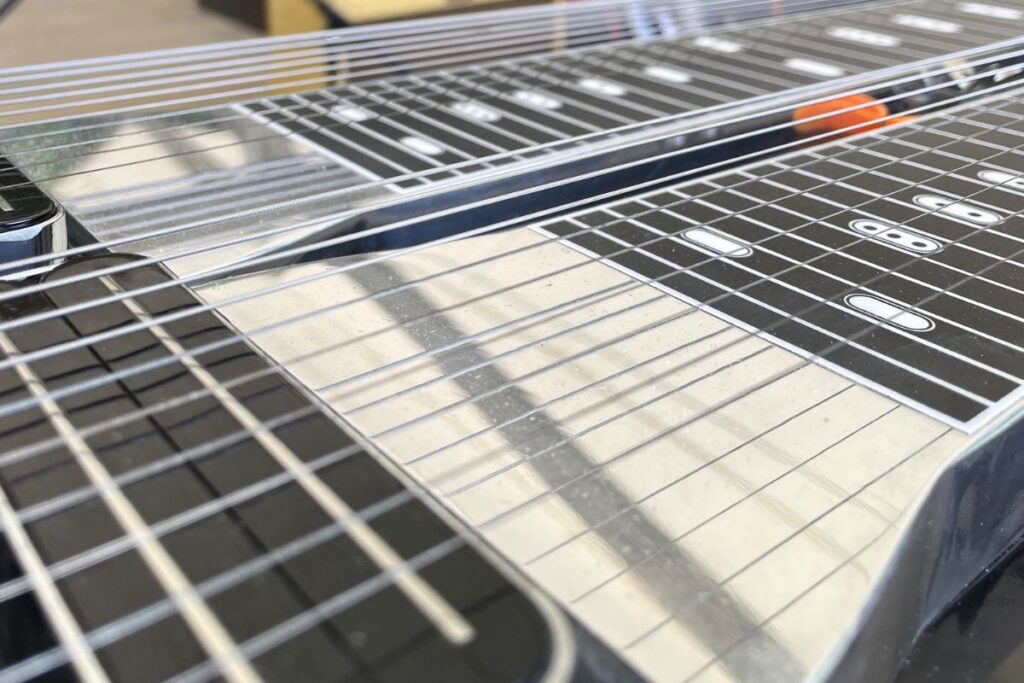
Because pedal steel is played with a bar and often involves sliding between positions, unwanted strings can easily ring out and create dissonance.
Developing good control with bar movement and tone helps, but the clarity of your sound ultimately comes from how well your right hand manages the strings.
Blocking allows you to:
- Play clean single notes without extra noise
- Control chord clarity and separation
- Shape phrases more intentionally
- Keep your sound focused while moving across the neck
Without it, even simple lines can sound cluttered.
The Two Main Ways to Block
There are two primary approaches to right hand blocking, and most players naturally blend both over time.
Palm Blocking
Palm blocking uses the side of your picking hand (near the pinky) to mute strings right after you play them.
This tends to feel more natural for slower lines, sustained notes, and traditional phrasing.
Pick Blocking
Pick blocking uses your fingers and thumb to stop strings immediately after they’re played.
This approach often feels more efficient for faster passages and tighter, more precise lines.
Using Both Together
Most players don’t think in terms of choosing one method over the other in real time.
Instead, your hand naturally finds the most efficient way to block depending on what you’re playing. The goal is to stay relaxed and let the motion feel natural rather than forced.
As you spend more time with these approaches, you’ll start to notice how small adjustments in timing and hand position make a big difference, especially when you’re working through them slowly and consistently the way they’re laid out in the Right Hand Picking & Blocking for Pedal Steel.
Developing a Natural Feel
One of the most important things to focus on early is keeping your right hand relaxed.
If your hand becomes tense, blocking becomes harder and your timing can suffer. When your hand is relaxed, your movements become smaller, more efficient, and more accurate.
A helpful way to think about it is:
“How can I play this cleanly while keeping my hand comfortable?”
That question will guide your technique better than trying to label every movement.
Working with pedal steel finger picks and thumb picks also plays a big role here, since your touch and control are directly connected to how you interact with the strings.
Simple Ways to Build Control
Instead of relying on rigid routines, it’s more effective to build blocking into the way you already practice.
A few ways to do that:
- Play single-note lines slowly and focus on stopping each note cleanly
- Practice small string groupings and listen for unwanted noise
- Move between positions and pay attention to what continues ringing
- Use a metronome to develop consistency in your picking and blocking
Developing this consistently comes from having a clear way to work through your practice, and these pedal steel practice tips can help you keep things focused without overcomplicating it.
For Guitar Players
If you’re coming from a six-string background, you already have a strong foundation.
Muting strings, controlling dynamics, and picking cleanly are all things you’ve already worked on. The main difference is that on pedal steel, those skills become more intentional and more exposed.
Seeing how these ideas connect can make the transition much smoother, especially when you look at the similarities between pedal steel guitar and standard six-string guitar in more detail.
Once you understand that connection, right hand blocking starts to feel less like a completely new technique and more like an extension of what you already know.
Conclusion
Right hand blocking is one of the defining techniques of pedal steel playing. It shapes your tone, your clarity, and your overall control of the instrument.
It takes time to develop, but it doesn’t need to feel complicated. With consistent attention and a relaxed approach, it becomes second nature.
Taking This Further
Getting this technique to feel natural usually comes down to repetition and clarity, especially when you’re working through the small details of how your hand moves and reacts to the strings.
If you want a more complete way to build that control over time, Right Hand Picking & Blocking for Pedal Steel walks through the exact approach that develops accuracy, consistency, and confidence in your picking hand.
If you want direct feedback on how your technique is developing, small adjustments in your hand position and timing can be worked through much faster in one-on-one pedal steel lessons.