As an Amazon Associate Playpedalsteel.com earns from qualifying purchases. This page contains affiliate links.
Pedal steel guitar is like an electric six-string guitar—but it ate all its vegetables and drank a lot of milk growing up.
At a core level, pedal steel and standard electric guitar share many similarities. However, there are also some key differences that change how the instrument is played and understood.
Here’s a clear breakdown of how they compare.
Core Similarities
At their foundation, both instruments:
- use strings, pickups, and amplification
- are played with the right hand picking the strings
- rely on left-hand positioning to control pitch
- can be used for melody, harmony, and rhythm
Because of this, many concepts from guitar transfer directly to pedal steel.
If you’re coming from guitar, it can help to understand how that transition works in more detail.
Key Differences in Design
While the instruments share a foundation, the design of pedal steel changes how everything functions.
A pedal steel:
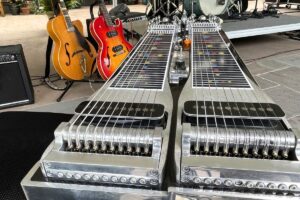
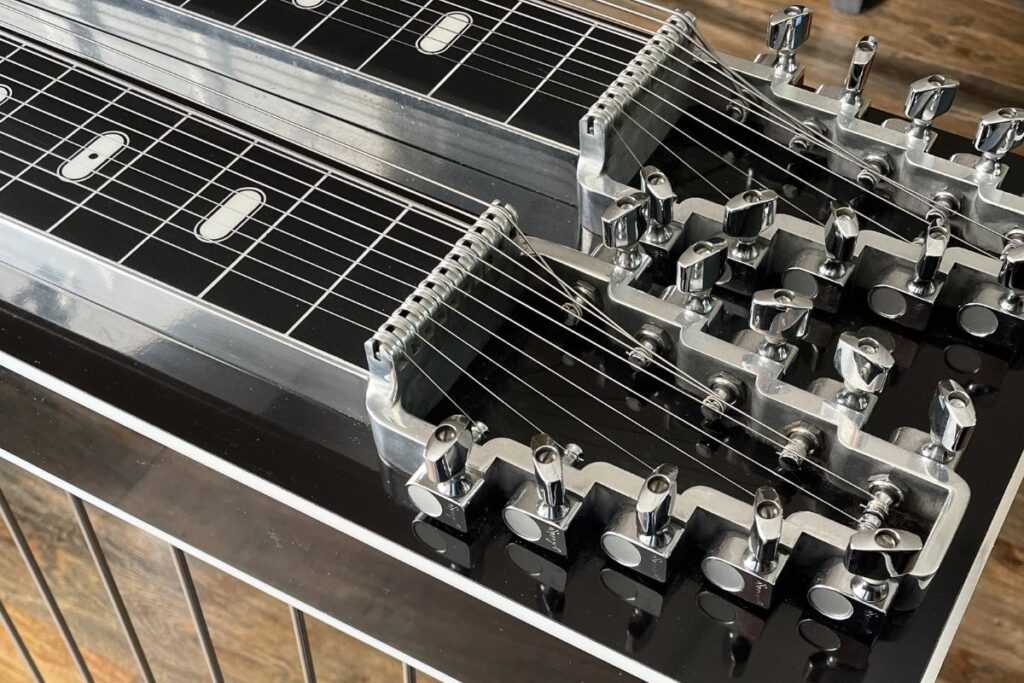
- typically has ten strings (sometimes more)
- has a neck that rests on a cabinet-style body
- sits on legs and is played seated
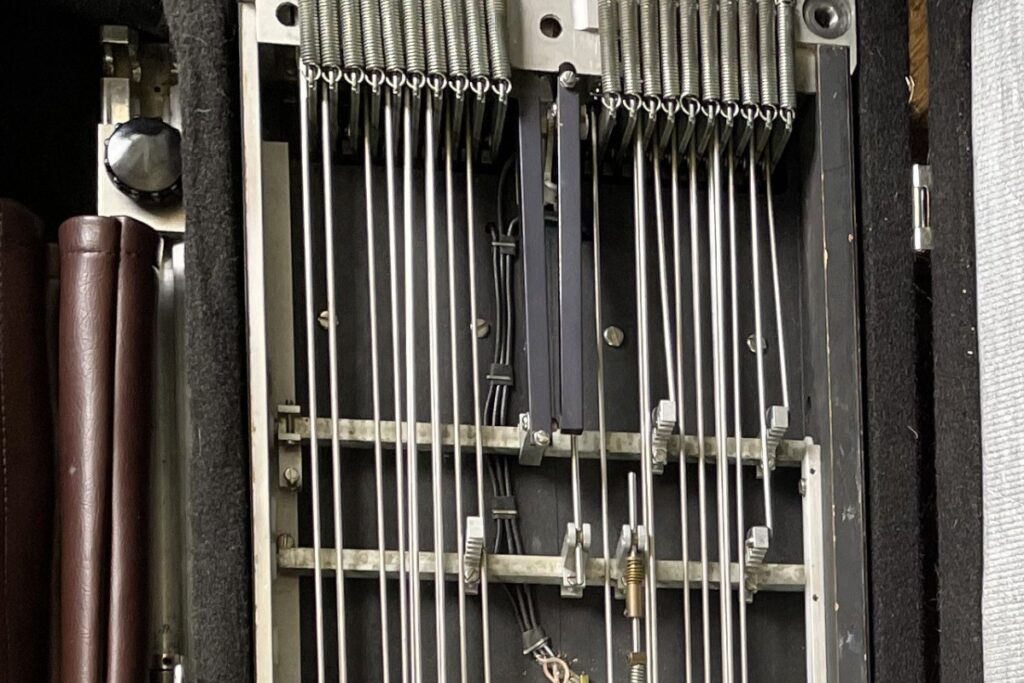
- includes pedals and knee levers that change pitch
These pedals and levers act like mechanical string bends.
If you want to understand this more clearly, it helps to see how pedals and knee levers work.
Picking and Right Hand Technique
Another major difference is how the strings are picked.
Pedal steel is usually played with a thumb pick and two finger picks.
This creates more attack and sustain compared to using bare fingers or a flat pick.
Muting strings is also much more critical on pedal steel. Because the strings ring out easily, unwanted notes must be controlled constantly.
This is where right hand blocking becomes essential.
Using a Bar Instead of Fretting
Instead of pressing strings down to a fretboard, pedal steel uses a bar to control pitch.
The bar glides across the strings, allowing for:
- smooth transitions between notes
- vibrato
- sustained tone
This is similar in concept to slide guitar, but the control and application are different due to the horizontal playing position.
Pedals, Levers, and Coordination
One of the biggest differences is the addition of pedals and knee levers.
These allow you to:
- change chords without moving the bar
- bend notes mechanically
- create harmonized movement within chords
Because of this, pedal steel requires coordination between:
- both hands
- the left foot
- both knees
Developing this coordination takes time and focused practice.
Sustain and Volume Control
Pedal steel produces significantly more sustain than standard guitar.
This comes from:
- higher output pickups
- use of a volume pedal
- bar contact with the strings
The volume pedal is used constantly in technique to shape notes after they are picked.
This is a major difference from standard guitar playing.
Weight and Physical Setup
Pedal steels are much heavier than standard guitars.
However, that added mass contributes to:
- sustain
- tonal stability
- mechanical functionality
Because the instrument is played seated with legs and a pedal system, it functions more like a hybrid between a guitar and a keyboard setup.
Why Guitar Players Transition Well
Even with the differences, guitar players often transition well to pedal steel.
That’s because they already understand:
- scales and chords
- picking mechanics
- musical phrasing
What changes is how those ideas are executed physically.
If you want to build on that foundation, it helps to follow a structured practice approach.
Conclusion
Pedal steel and standard six-string guitar share a common musical foundation, but they differ in how that foundation is applied.
The addition of pedals, levers, and a bar creates a much wider range of expression—but also adds complexity.
For guitar players, this means you’re not starting from scratch. You’re building on what you already know and adapting it to a new system.
Taking This Further
Understanding how pedal steel connects to guitar becomes much clearer when you look at the actual process of switching from guitar to pedal steel.
Having a clear starting point also makes a big difference, especially when you’re working through pedal steel resources for beginner players in a structured way.
Building consistency over time usually comes down to following a system, which is where instructional material can help guide your practice in a more focused direction.
If you want more direct guidance, working through pedal steel lessons can help you refine your technique and make faster progress.