As an Amazon Associate Playpedalsteel.com earns from qualifying purchases. This page contains affiliate links.
Playing pedal steel can be a rewarding step, especially if you already come from a guitar background. Making the transition takes time, patience, and some focused effort, but it often deepens your understanding of both instruments and helps you grow as a musician overall.
If you approach it the same way you approached learning guitar, you’ll find that a lot of your musical instincts carry over. At the same time, pedal steel opens up new ways of hearing and approaching the instrument.
Making the Switch
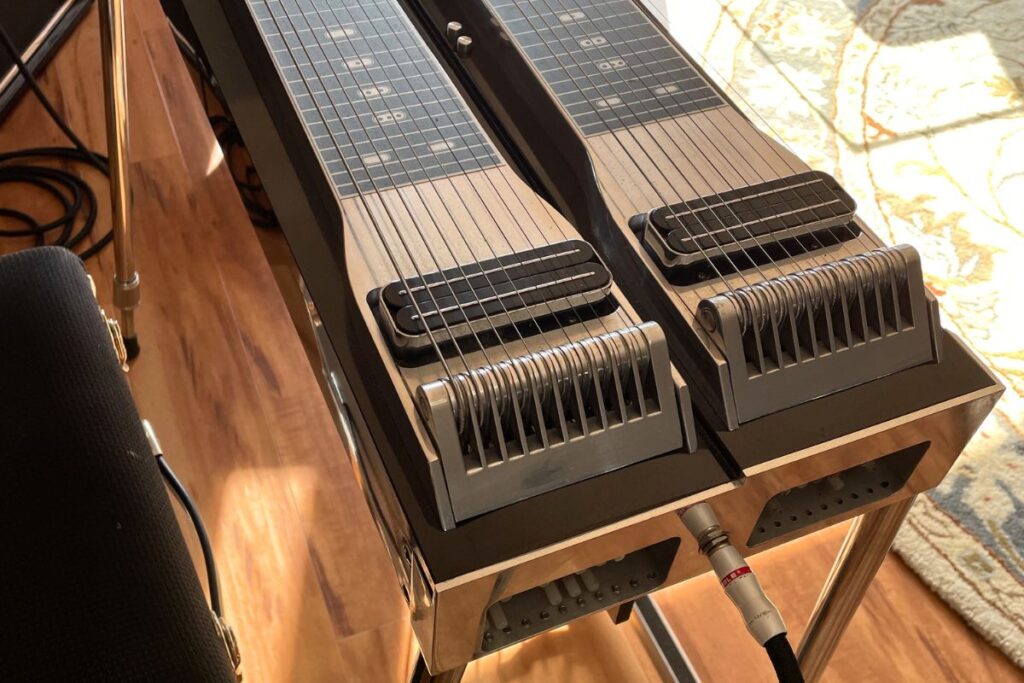
Getting started is often as simple as following your curiosity and spending time with the instrument. As you begin playing, you’ll naturally start connecting what you already know on guitar to how things work on pedal steel.
Finding an instrument can take a bit more effort since it’s more specialized, but knowing what to look for makes the process much easier. A detailed breakdown of options and features can be found in this pedal steel buyer’s guide.
As you begin playing, some of the biggest differences show up in the techniques involved:
- Muting strings becomes more intentional through right hand blocking and the use of fingerpicks
- Notes are played with a bar instead of fretting with your fingers, which changes how you approach bar control
- Pitch changes happen through pedals and levers, which you can understand more clearly by looking at how pedals and knee levers work on a pedal steel
- A volume pedal becomes part of your playing, shaping sustain and dynamics
Each of these takes some time to get used to, but they’re also what make the instrument so expressive.
Music Theory
Having some background in music theory can help, but it’s not required. A lot of what you already understand from guitar—chords, scales, and relationships—translates directly.
When you know what you’re listening for, things like chords and scales begin to appear more clearly on the instrument. Working through fretboard maps can make this even easier to see over time.
Even though pedal steel has a reputation for being difficult, much of it is actually very logical once you begin connecting the movements of pedals and levers to the sounds they create.
You’ll also notice that many musical ideas can be played in one position without moving the bar very far, especially when you begin understanding how the E9 tuning for pedal steel guitar is laid out.
A Deeper Look Into Its History
The pedal steel evolved from lap steel, which itself came from Hawaiian guitar traditions in the early 1900s. Understanding that background can make the instrument feel much more familiar.
If you imagine placing a guitar flat on your lap and playing it with a slide, you’re already close to the concept. Pedal steel builds on that idea by adding pedals and levers that mechanically change pitch.
Learning more about where the instrument came from can also give you a clearer sense of how it’s used today, especially when you look at the broader context in the complete guide to pedal steel guitar.
Conclusion
One of the most interesting parts of making the switch is how it affects your guitar playing. Many players find that their touch, intonation, and musical awareness improve on both instruments.
Spending more time on pedal steel can actually give you a fresh perspective when you return to guitar, especially in areas like phrasing and slide playing.
Both instruments offer a wide range of musical expression, and learning how they relate to each other can open up new possibilities in your playing.
Taking This Further
Seeing how the transition works in real playing situations becomes clearer as you spend time with switching from guitar to pedal steel from different angles.
Building a solid foundation tends to come from working through pedal steel resources for beginner players in a way that lets things connect naturally over time.
Progress becomes more consistent when you have a clear way to work through things, which is where instructional material can help you keep moving forward.
Working through pedal steel lessons can also help refine your technique and give you direct feedback as you develop.