
As an Amazon Associate Playpedalsteel.com earns from qualifying purchases. This page contains affiliate links.
One of the biggest challenges with learning pedal steel isn’t just the difficulty of the instrument—it’s knowing what to practice.
It’s easy to spend time playing without feeling like things are really improving, especially when your practice feels scattered across too many directions.
A more effective way to approach it is to focus on a few core areas that consistently show up in real playing. When those areas develop together, your progress starts to feel much more connected.
This idea is at the core of how pedal steel learning starts to make sense, especially when you look at how technique, fretboard understanding, and musical application work together instead of separately.
The sections below aren’t just exercises—they’re five practice areas you can come back to consistently. Each one includes tab examples, but the real goal is understanding what you’re developing and how it connects to your playing.
1) Connecting the Fretboard with Harmonized Intervals
A lot of pedal steel playing comes down to recognizing interval relationships on the neck—especially thirds and sixths.
Instead of memorizing isolated patterns, this approach helps you see how notes connect across positions.
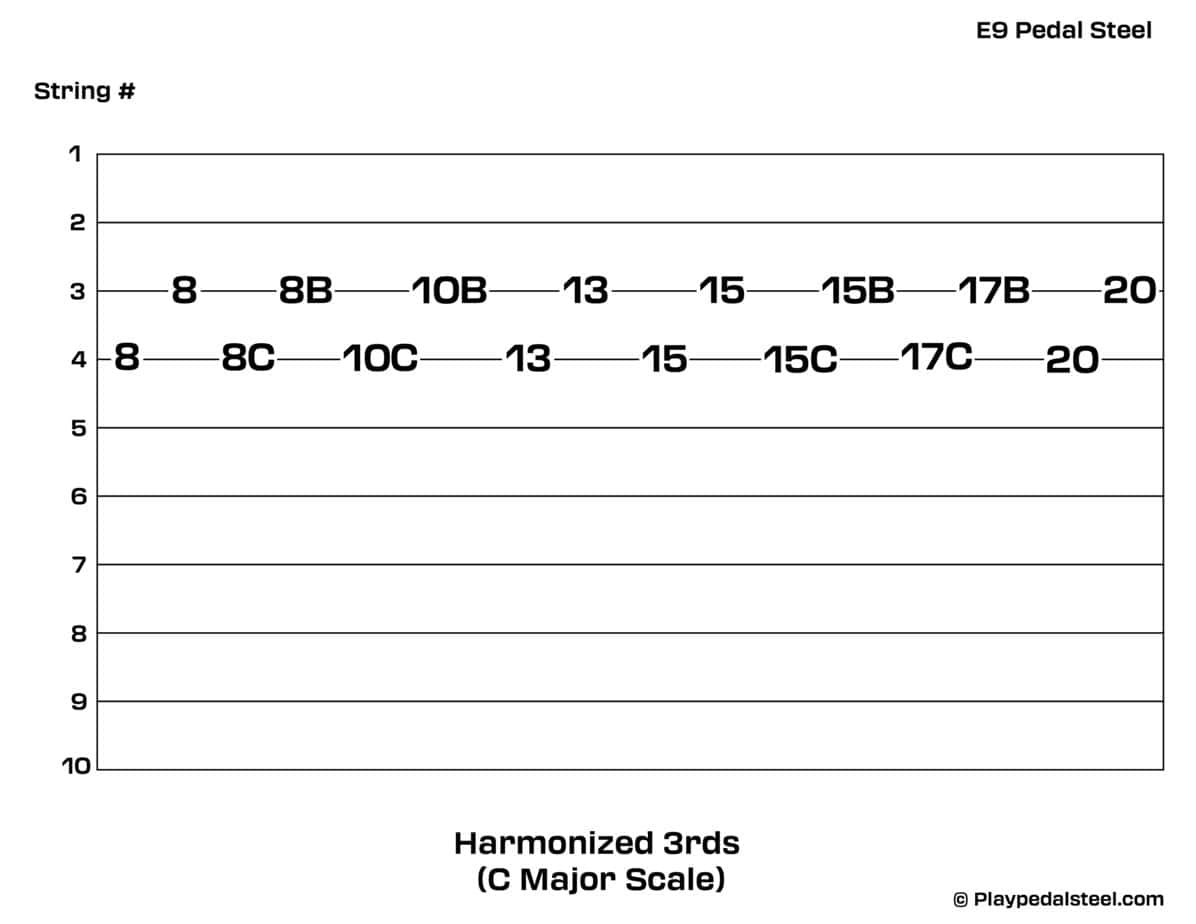
This type of movement develops:
- Awareness of where notes sit on the fretboard
- Control of bar movement between positions
- The ability to hear interval relationships clearly
You can expand it further:
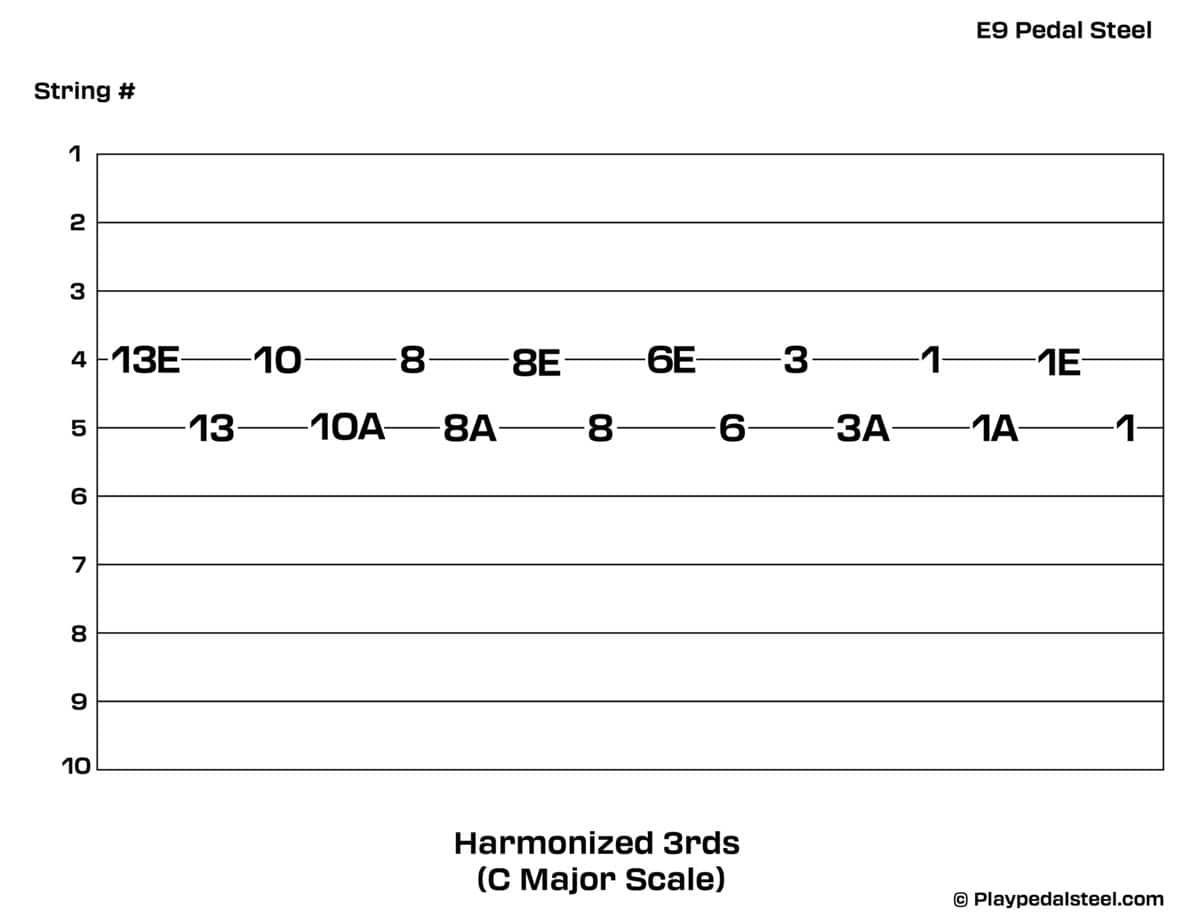
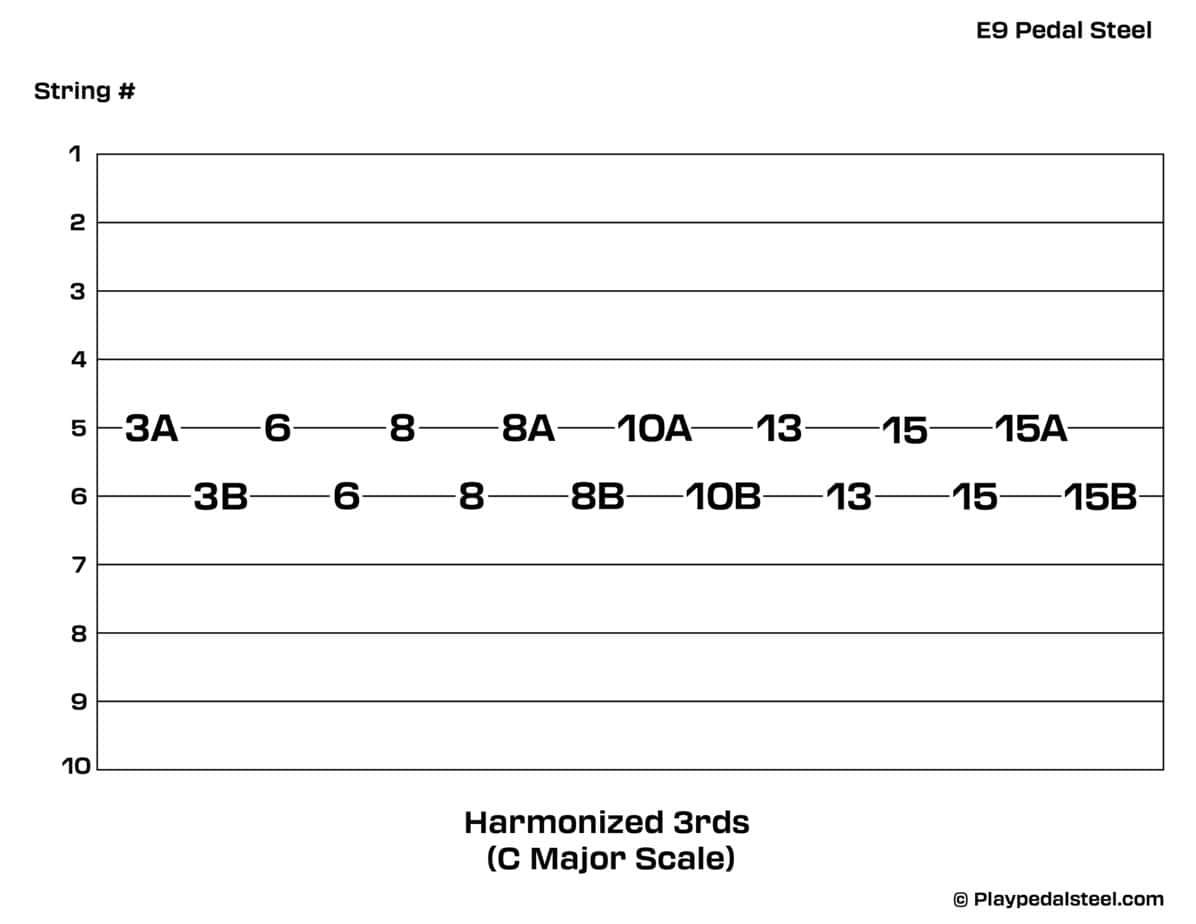
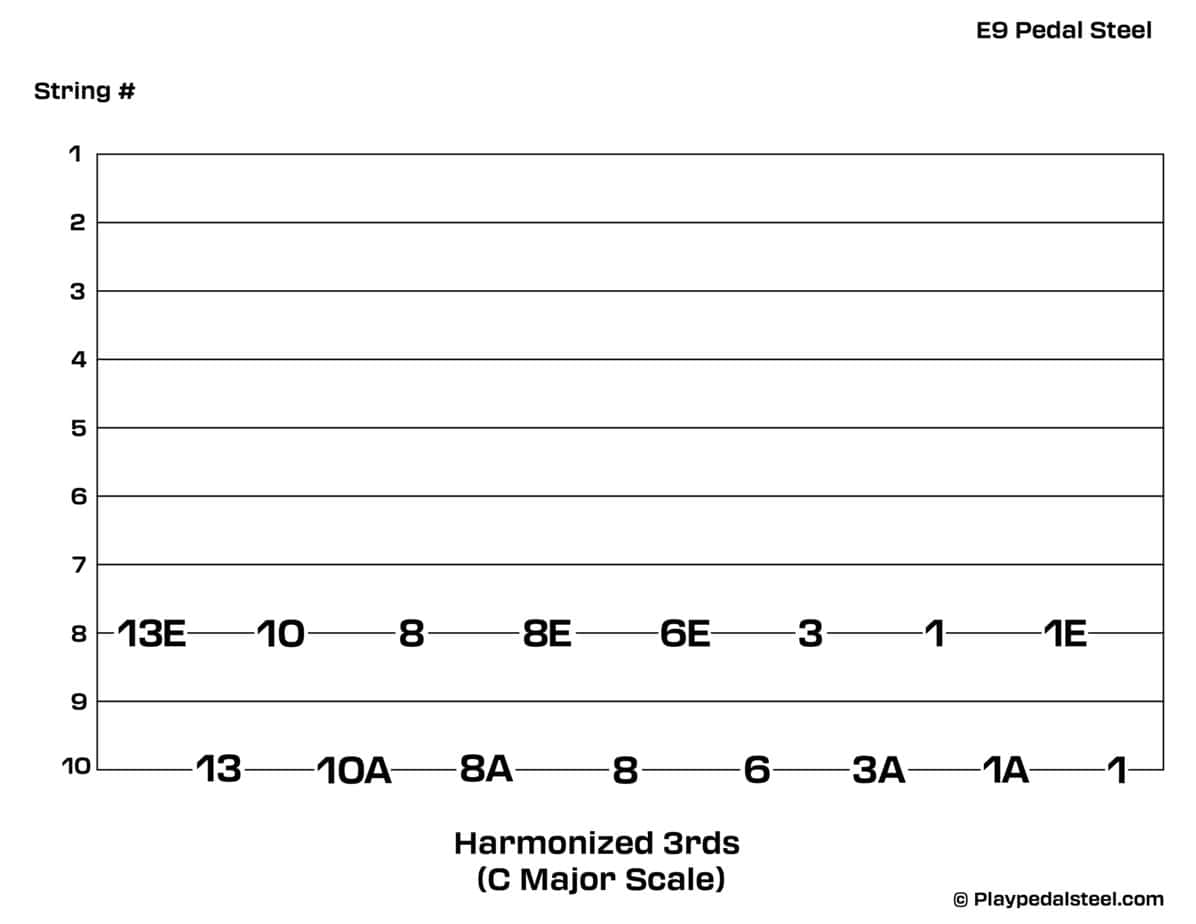
The goal isn’t just to play these patterns—it’s to connect them to positions you already use.
When you start seeing how these intervals show up in different areas of the neck, the fretboard becomes much easier to navigate, especially when you understand how the main E9 positions relate to each other.
This is where memorization starts turning into understanding.
2) Developing Control with Pedal Movement
A lot of pedal steel playing depends on how smoothly you move between pedal combinations—not just hitting the right pedals, but transitioning between them cleanly.
This area of practice focuses on that control.
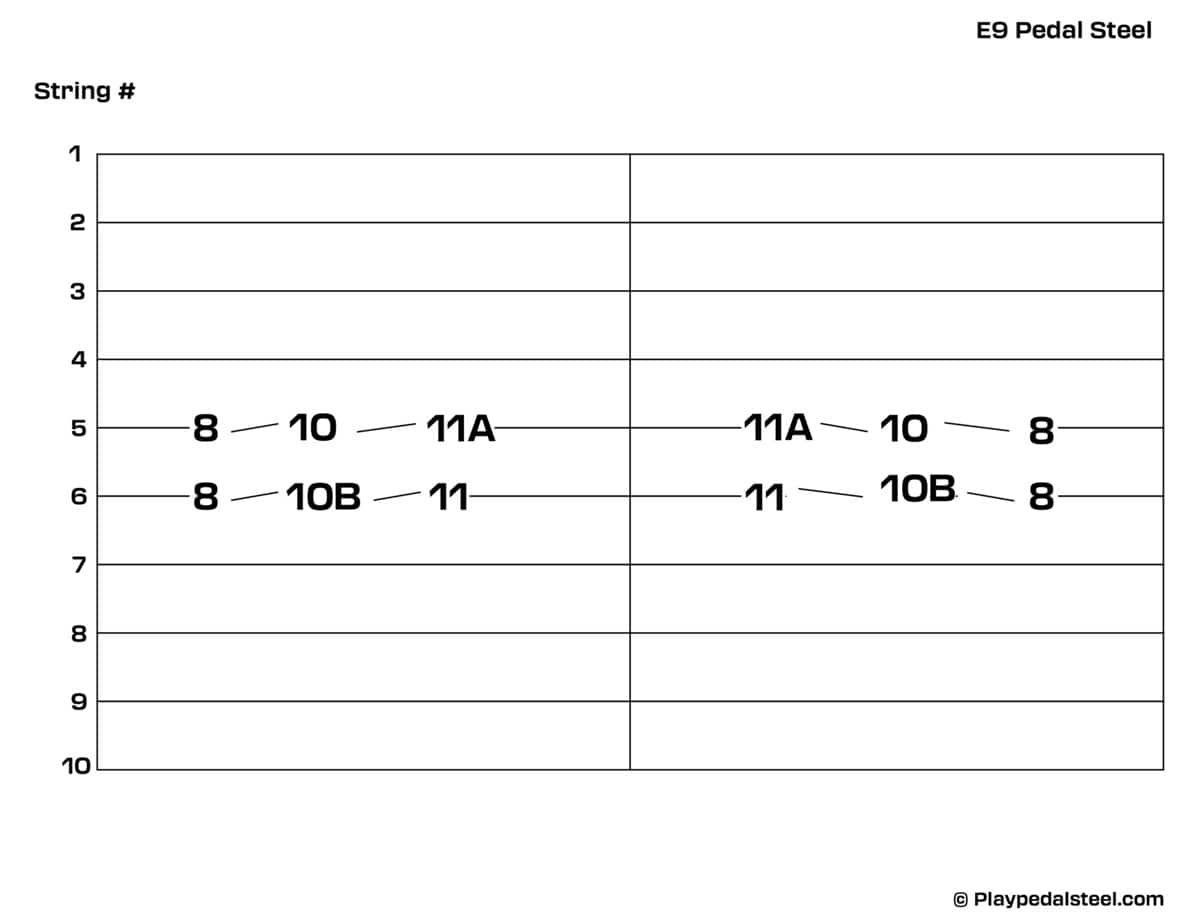
What you’re working on here:
- Smooth engagement and release of pedals
- Coordination between bar movement and foot movement
- Consistent pitch transitions
The key is to slow everything down and listen for continuity. The sound should feel connected from note to note, not stepped or interrupted.
This kind of control builds over time and becomes much more natural as your foot develops consistency and accuracy in how it utilizes the pedals.
Even a few focused minutes here can noticeably improve how your playing feels.
3) Playing Through Chord Changes in One Position
One of the most important shifts on pedal steel is moving from “playing patterns” to actually playing through chord changes.
A simple way to start is by staying in one position and learning what works over each chord.
Here’s an example in the key of C at the open position:
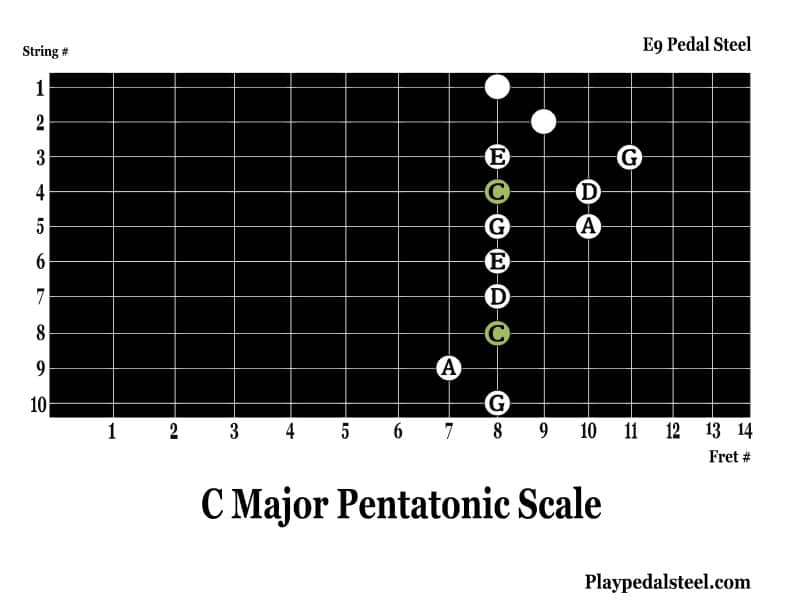
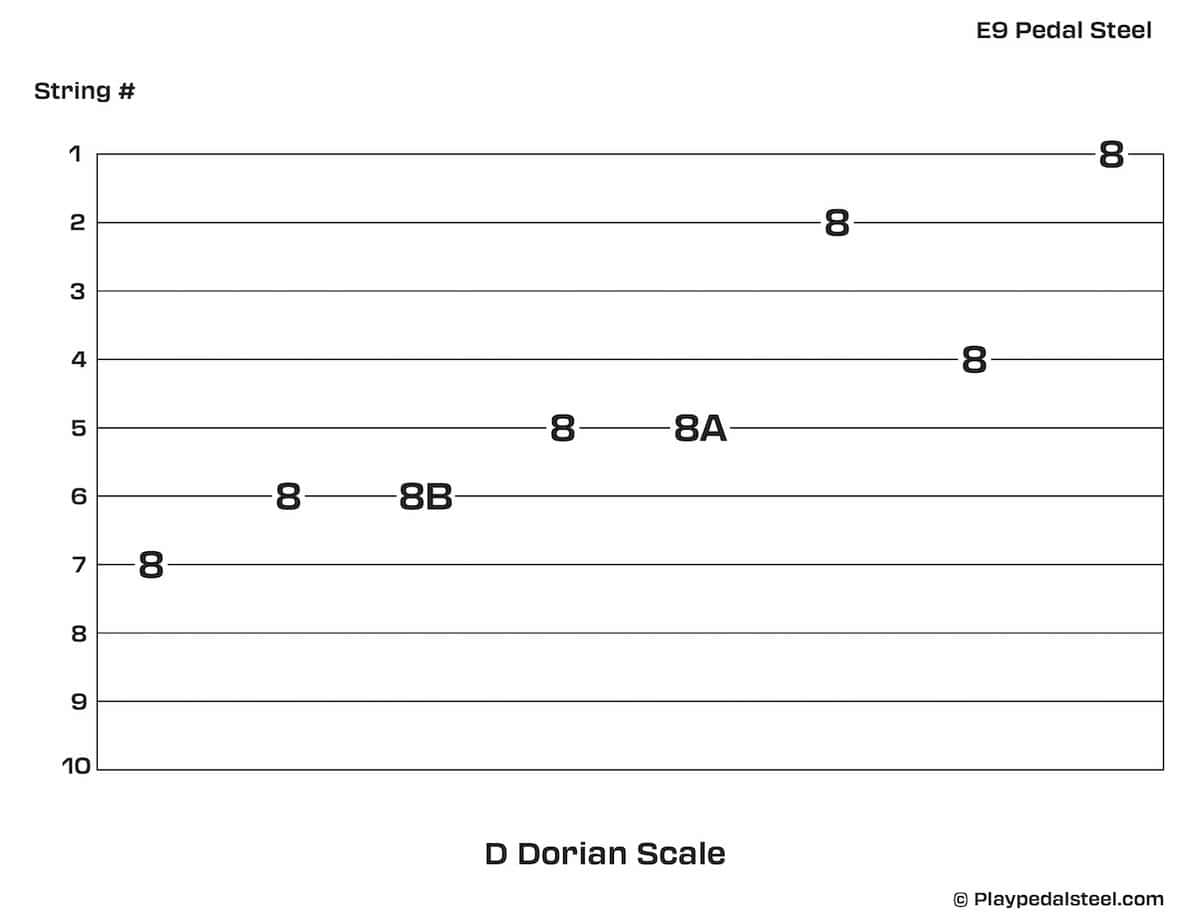
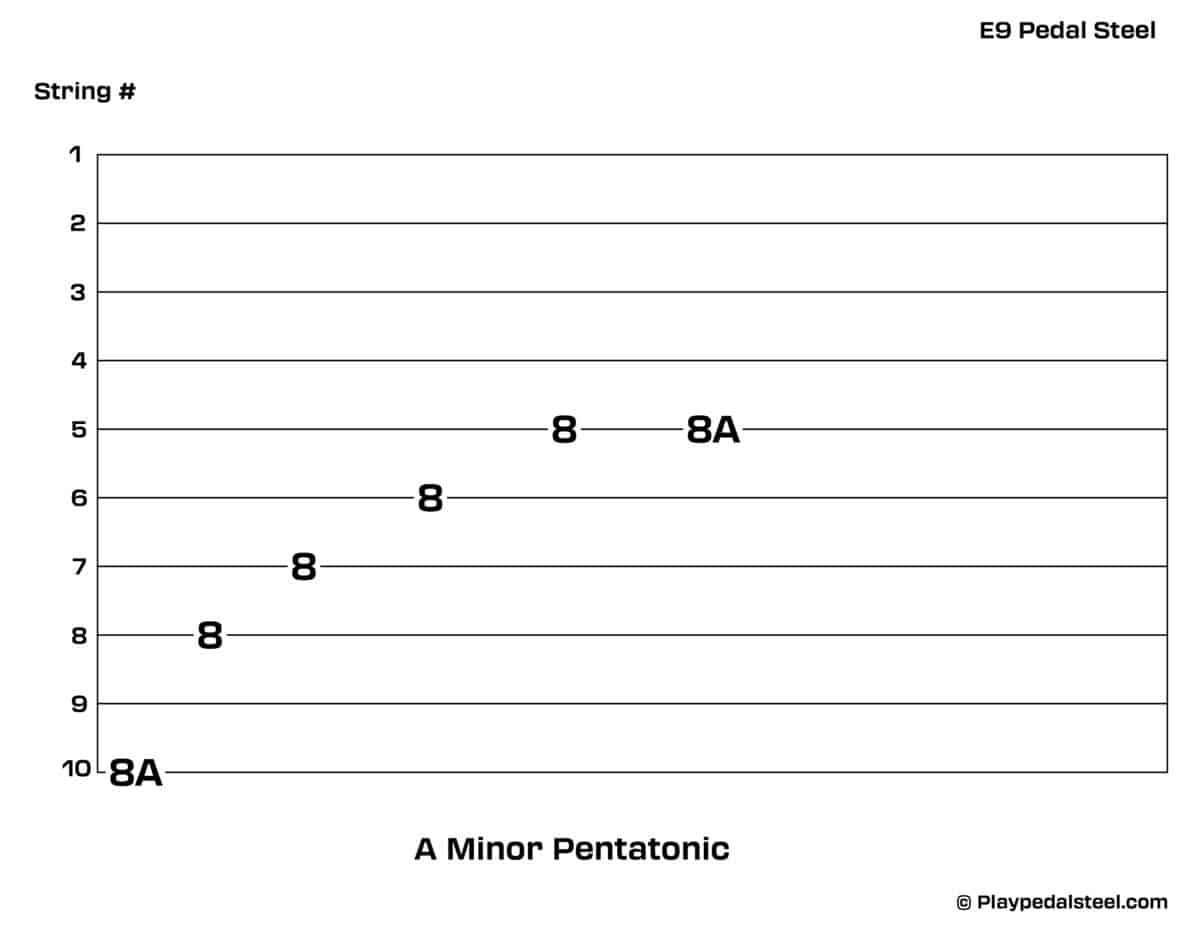
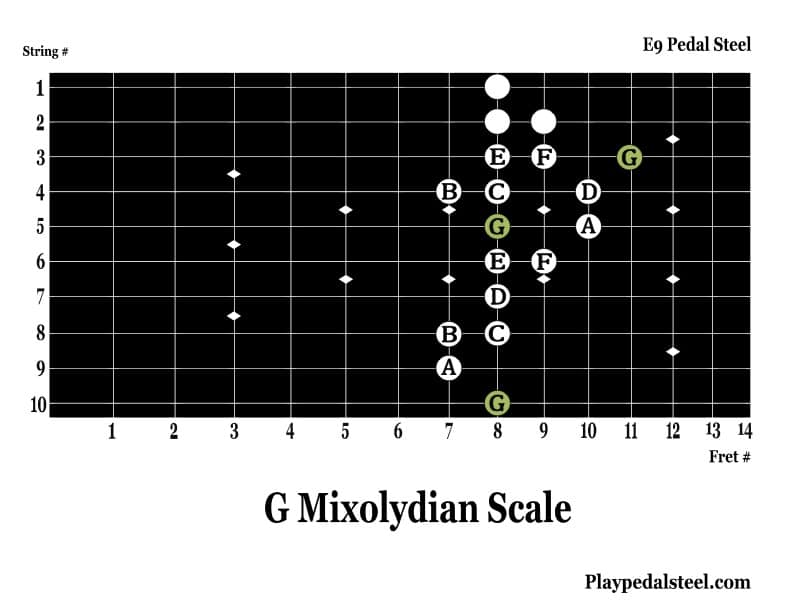
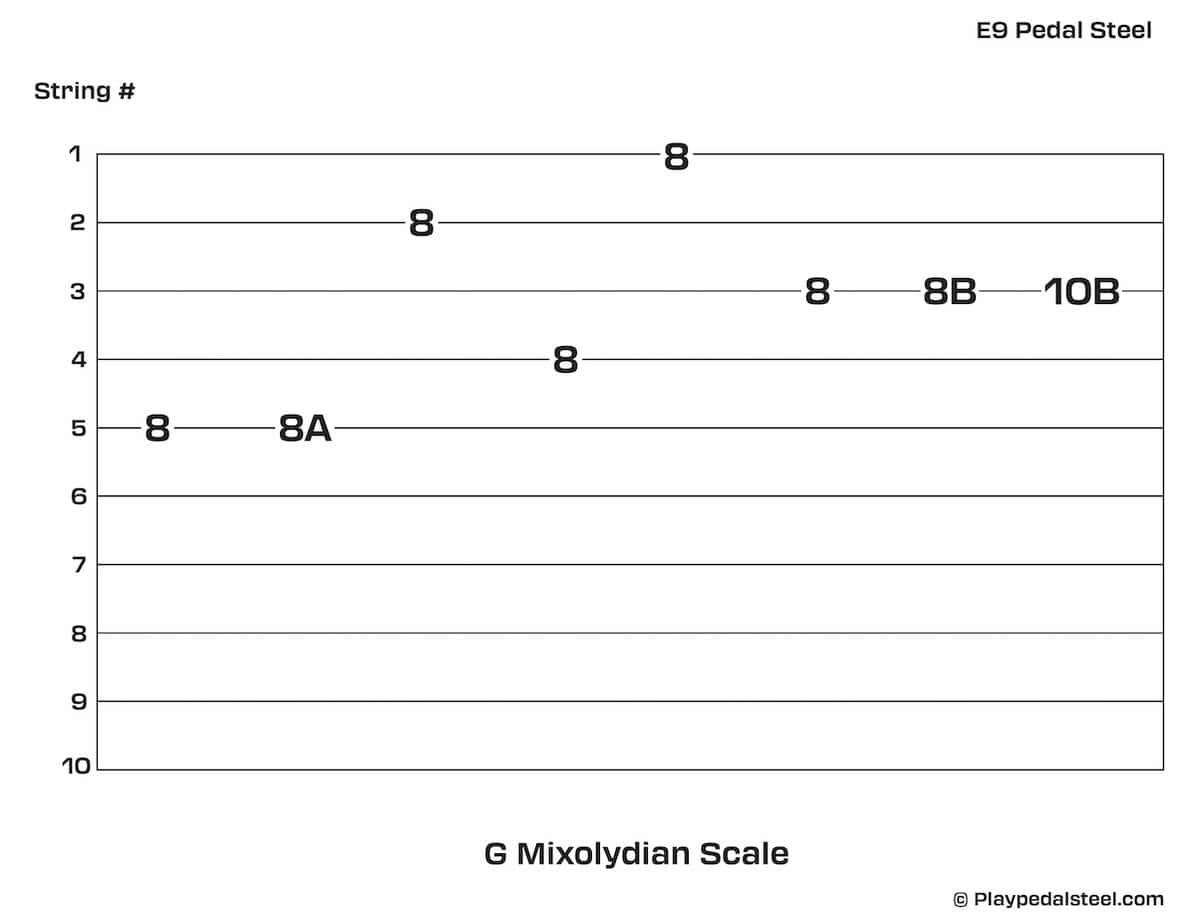
This approach helps you:
- Hear how scales relate to chords
- Build phrases without moving the bar
- Develop confidence in a single area of the neck
Instead of thinking about “what to play,” you begin to understand why certain notes work over certain chords.
That understanding becomes much clearer when you can visualize how these notes sit on the fretboard as a whole.
This is where practice starts turning into actual music.
4) Seeing the Major Scale Across Positions
Most of what we play comes back to the major scale in some form.
Being able to see it clearly across different positions gives you a foundation for:
- Melodies
- Chord tones
- Improvisation
Start by working through it in different pedal positions:
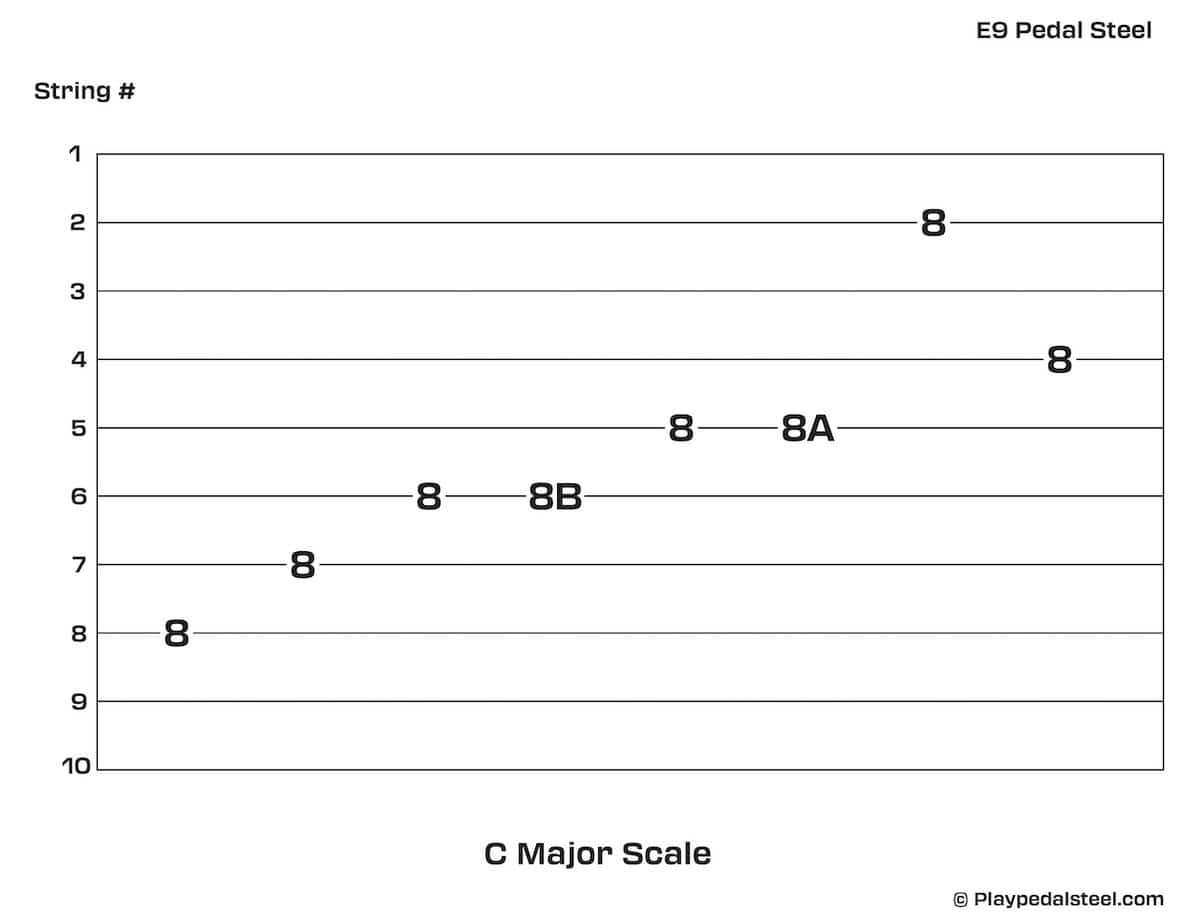
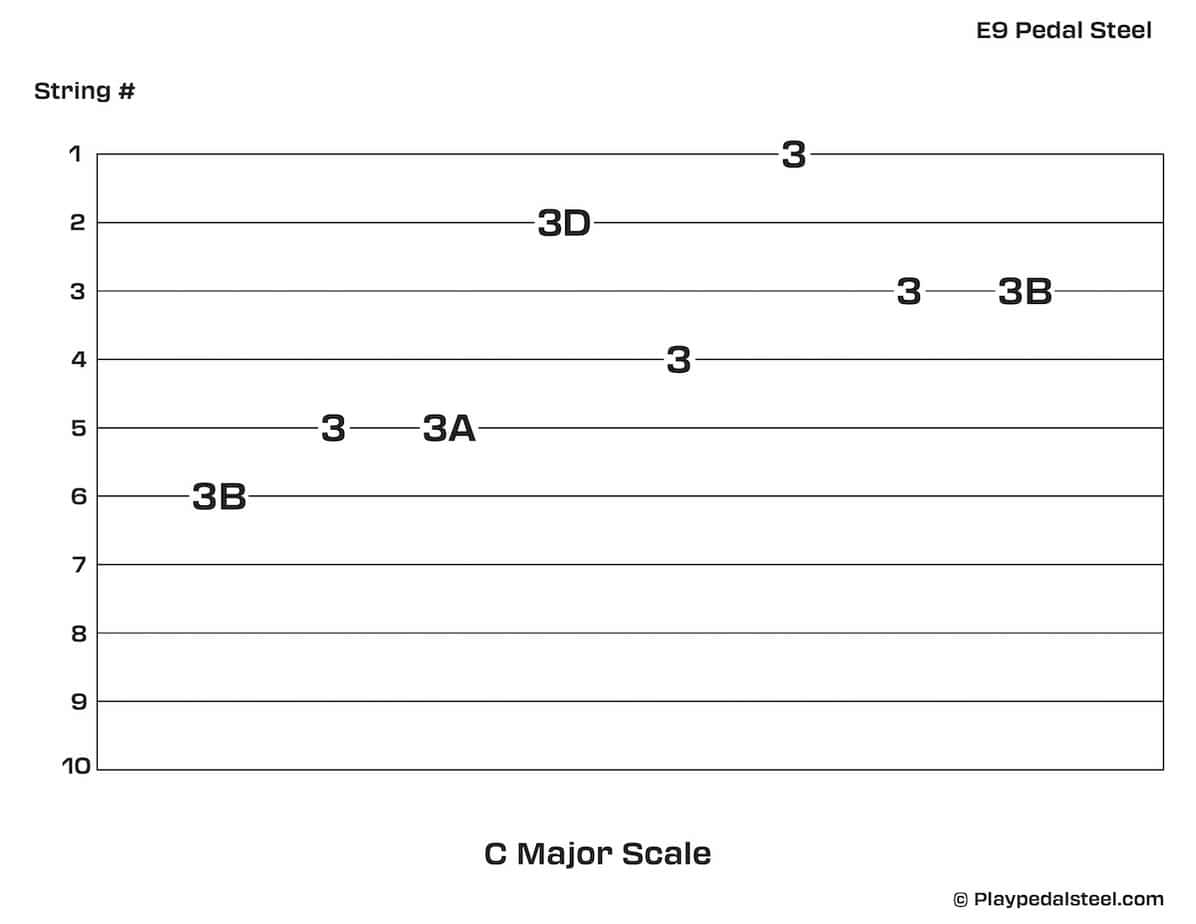
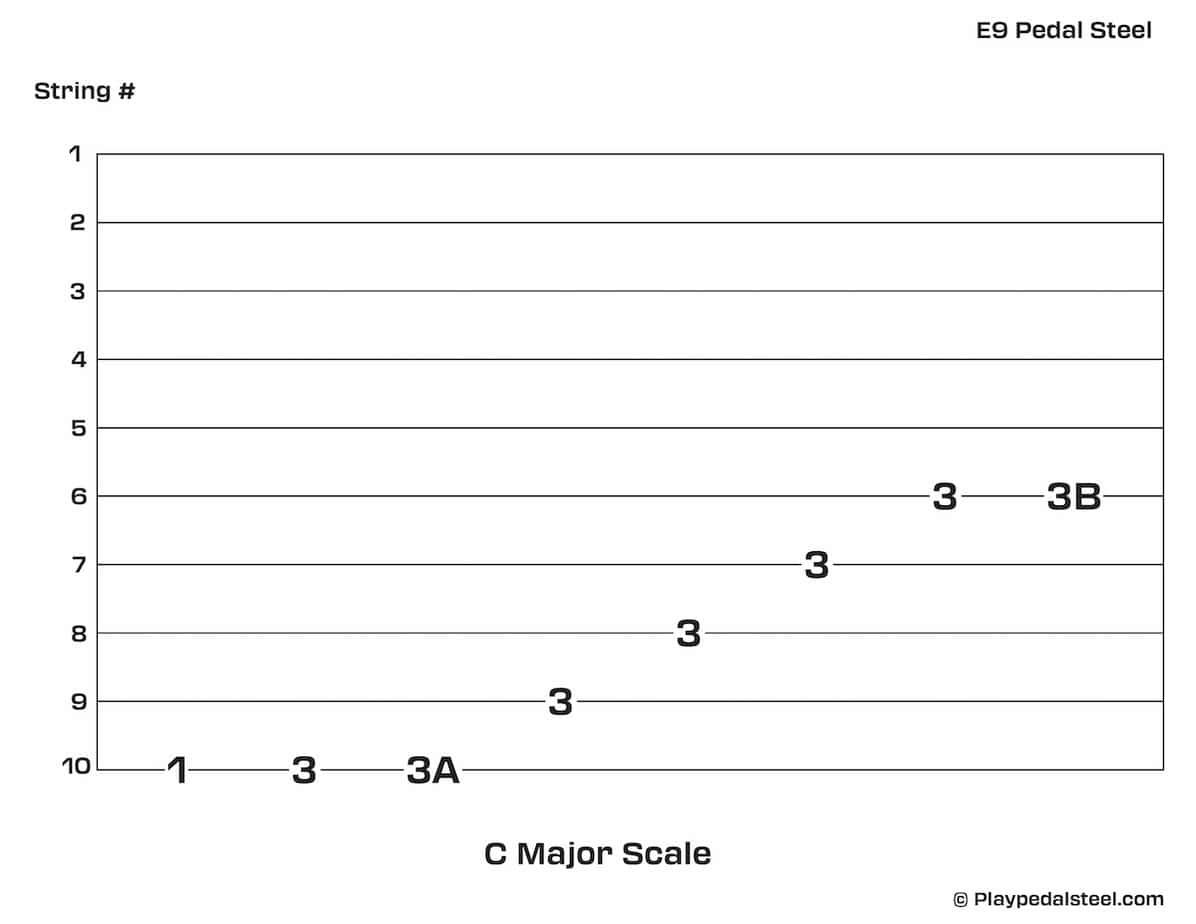
Then remove the pedals:
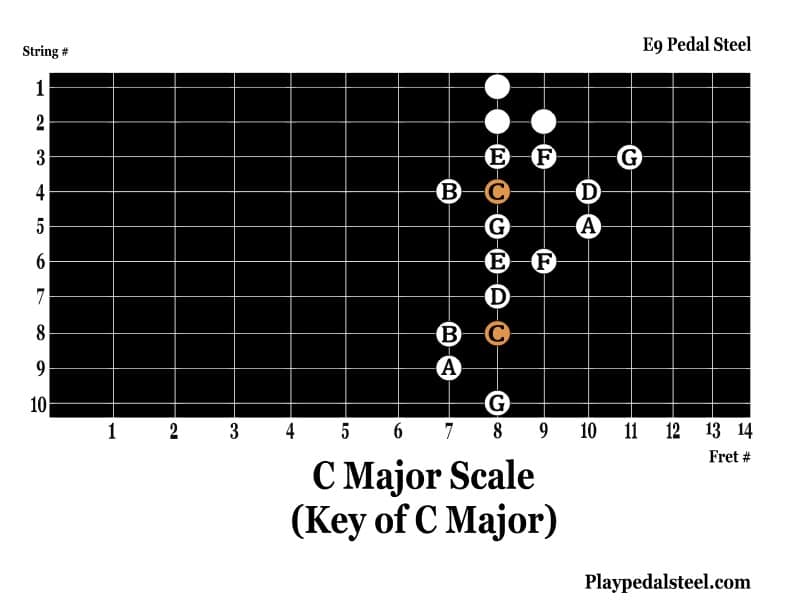
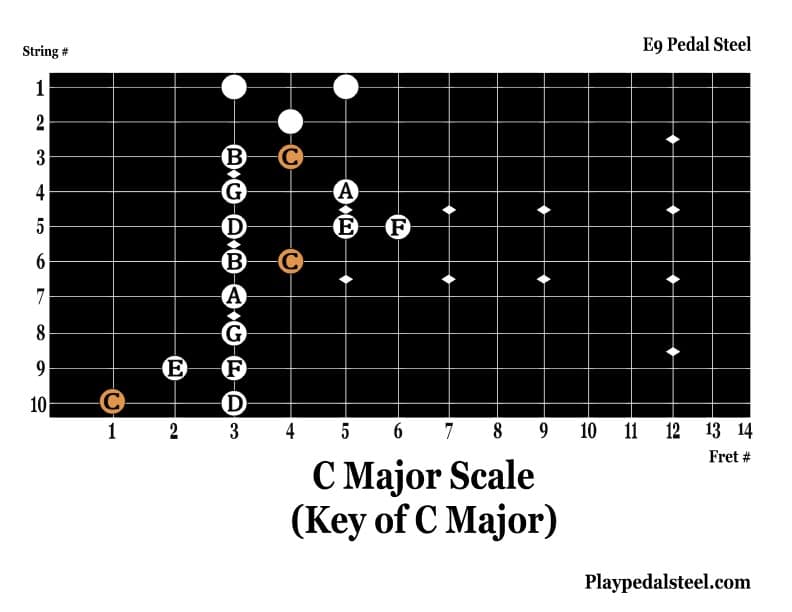
This forces you to:
- Control the bar more precisely
- Know where the notes actually are
- Hear the scale without relying on pedal movement
From there, applying it over a backing track or sustained tonal center helps connect what you’re seeing with what you’re hearing.
This is where the fretboard starts to feel more intuitive.
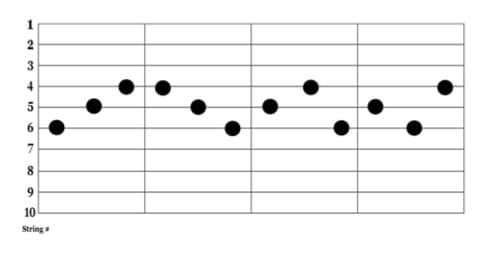
5) Cleaning Up Your Sound with Picking and Blocking
No matter what you’re playing, clarity comes down to how well you control unwanted string noise.
This area focuses on picking and blocking—one of the biggest differences between sounding clean and sounding cluttered.
Start with simple rolls:
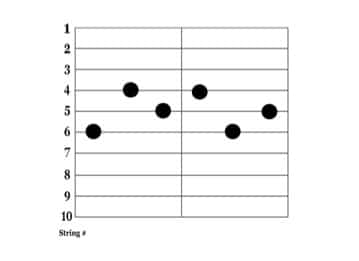
Then move across string groups:
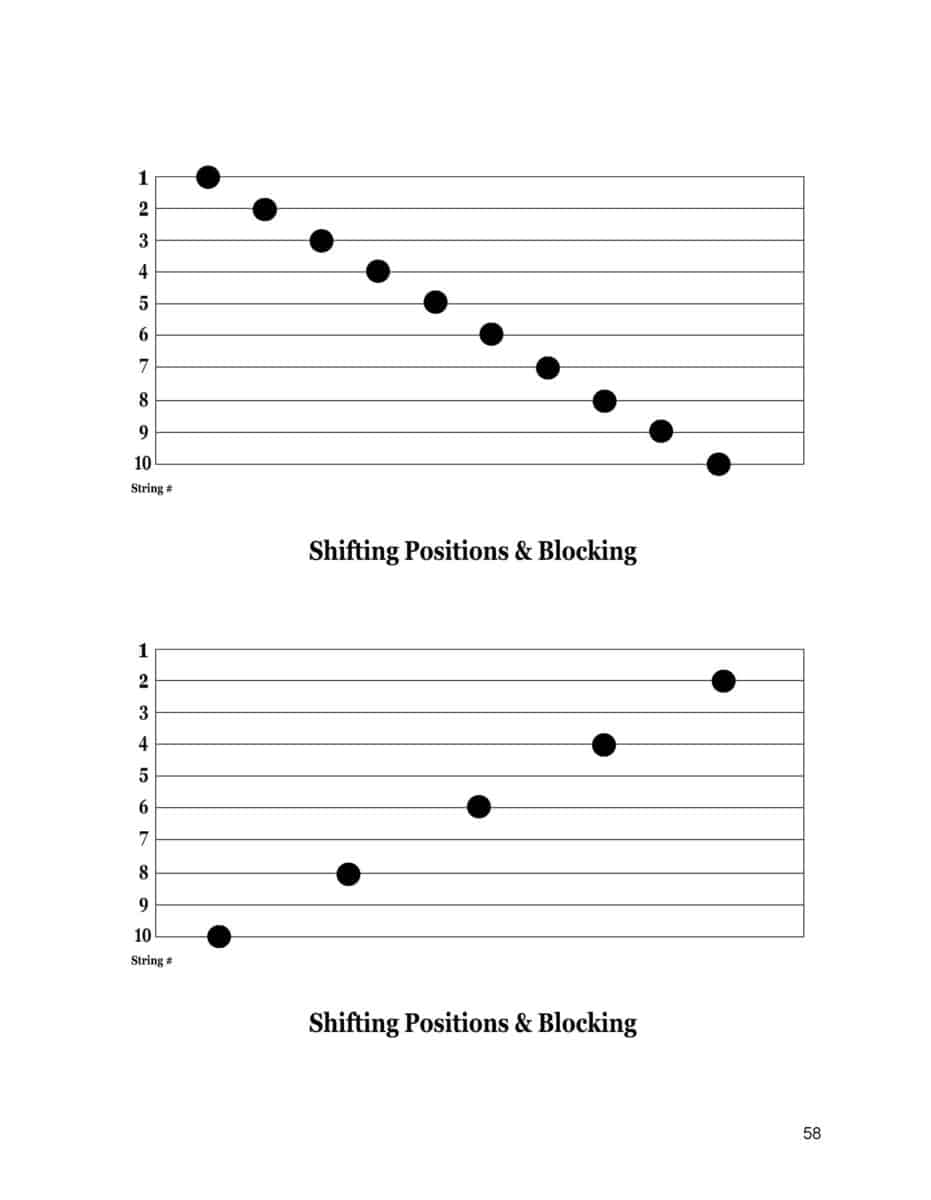
This develops:
- Separation between notes
- Control over string noise
- Consistent tone across strings
Keep this slow and controlled. Speed comes later.
This kind of control directly affects everything you play, and improving it is one of the fastest ways to clean up your overall sound.
Bringing It Together
Each of these areas connects back to three core parts of playing:
- Technique
- Fretboard understanding
- Application over chord changes
When your practice touches all three consistently, things stop feeling scattered and start feeling connected.
You don’t need to practice everything—you just need to practice the right things in a connected way.
Taking This Further
As these areas start to come together, applying them in real musical situations is what makes them stick.
That becomes much clearer when you work through actual phrases and movements in 200 Country Riffs & Licks for E9 Pedal Steel, where these same ideas show up in context.
Seeing how scales and patterns connect across keys and positions also becomes much easier when you spend time with The Scale Book for E9 Pedal Steel alongside this kind of focused practice.
If you want help tying these areas directly into your own playing, working through them in one-on-one pedal steel lessons can make the connection much clearer in a short amount of time.