
As an Amazon Associate Playpedalsteel.com earns from qualifying purchases. This page contains affiliate links.
Tuning a pedal steel can become a topic with a lot of depth and variables. But in practice, it becomes much more manageable when you narrow it down to a few key decisions:
- Whether you want to tune straight up to 440 Hz (Equal Temperament) or use a tempered approach (Just Intonation)
- What tuner you’re using, based on accuracy, visibility, and reliability
- Where and how that tuner fits into your setup
Tuning affects nearly everything about how your instrument feels and sounds, so using a reliable tuner is usually worth it—and there are some excellent options available that don’t require a huge investment.
If you’re tuning straight up with a pedal tuner, I’ve had consistently good results using the TC Electronic PolyTune 3 Mini, especially for its accuracy and clean display.
For players who prefer tempered tuning, using a tuner with built-in presets can make the process much more straightforward. That’s where something like the Peterson StroboStomp HD Pedal Tuner becomes especially useful.
Equal Temperament vs. Tempered Tuning
This is one of those topics that can get complicated quickly, but it doesn’t have to be.
Equal Temperament (often called “tuning straight up”) means everything is tuned to A=440 Hz. Tempered tuning, or Just Intonation approaches, involve adjusting certain notes slightly to make chords sound more balanced.
Both approaches are used by great players. Even Buddy Emmons used both at different points in his career, eventually favoring straight-up tuning later on.
Tuning Straight Up (Equal Temperament)
You can get a very solid, musical result by tuning the same way most other instruments do—everything aligned to 440 Hz.
I’ve used this approach for years, and one of the biggest advantages is how well it blends with other instruments in real-world playing situations.
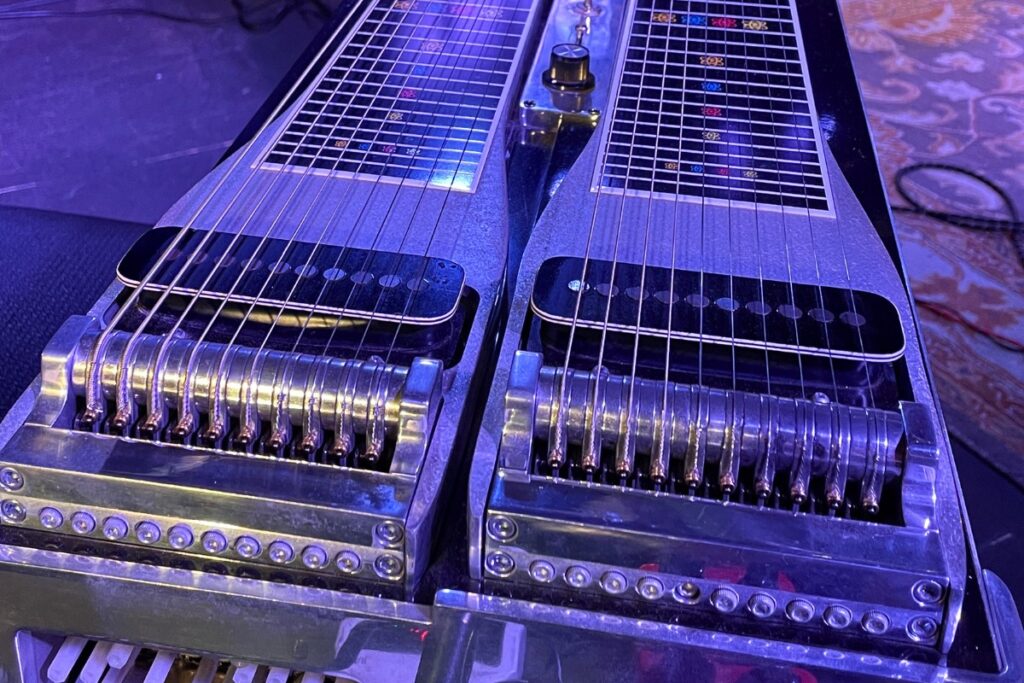
One small adjustment that can help is slightly flattening your G# strings on the E9 neck. This rounds out your major chords a bit and can make them feel more natural.
Getting familiar with how those notes function becomes clearer as you spend time understanding how the E9 tuning is laid out across the neck.
Adjusting Your Ear
Over time, your ear will naturally adjust to these small differences in pitch.
You may also start to compensate physically through bar movement without really thinking about it. This is where your control starts to improve in a noticeable way.
That kind of control develops faster when you spend time focusing on smooth movement across the strings, especially when working through practice exercises that target bar accuracy and consistency.
Tuners for Straight-Up Tuning
Most modern tuners are designed with Equal Temperament in mind, so there are plenty of good options.
For pedal steel specifically, I still come back to the TC Electronic PolyTune 3 Mini. It’s accurate, easy to read, and fits cleanly into a pedalboard setup.
When choosing a tuner, it’s worth paying attention to:
- Display clarity (especially on darker stages)
- Accuracy and tracking speed
- Build quality and reliability
- Signal path (true bypass or buffer)
Sweetened (Tempered) Tuning
If you prefer a tempered approach, many players use tuning charts that adjust certain notes based on how the instrument behaves mechanically.
Pedal steel has its own quirks—pedals and levers can affect pitch in subtle ways, and things like cabinet drop can come into play. Understanding how those changes interact starts with knowing what the pedals and levers are actually doing to each string.
Sweetened Presets
This is where Peterson tuners stand out.
They include built-in “sweetened” presets specifically designed for pedal steel, which removes a lot of guesswork from the process.
The Peterson StroboStomp HD Pedal Tuner is a strong option here, offering extremely high accuracy along with customizable presets.
Tuner Placement and Setup
Where you put your tuner matters more than most people think.
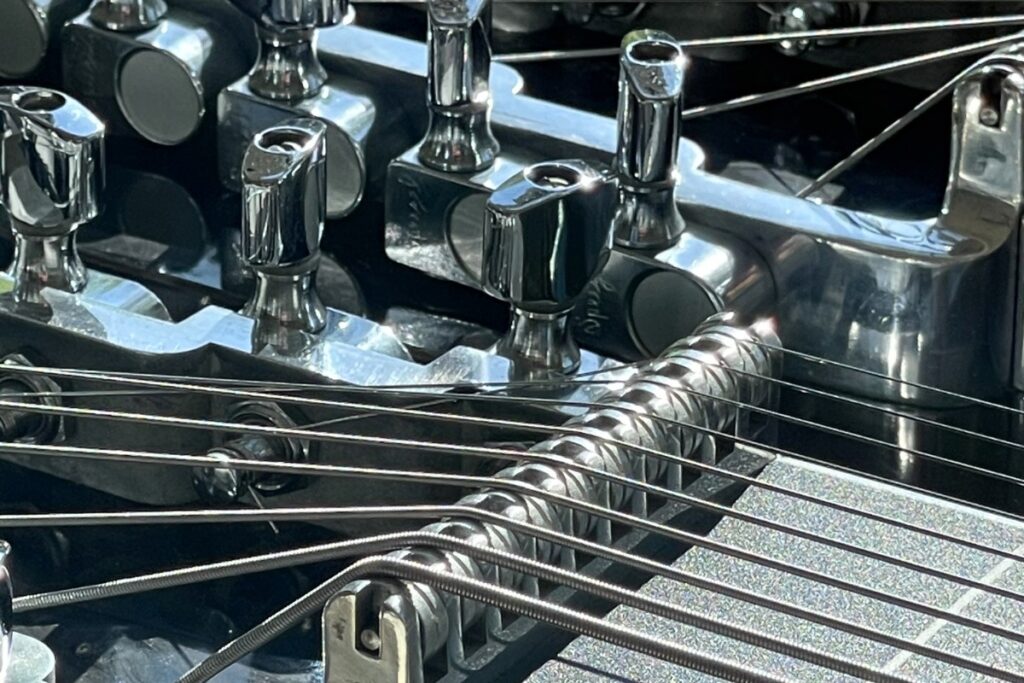
Some players prefer a pedalboard setup, while others want something mounted directly to the instrument.
If you’re building out your rig, it helps to think about how your tuner fits alongside the rest of your signal chain and layout.
Clip-On Tuners for Pedal Steel
Clip-on tuners can be surprisingly useful, especially for quick setups or situations where you’re not running a full rig.
They’re small, portable, and don’t require being in your signal chain.
One solid option here is the Peterson StroboClip HD Clip-On Strobe Tuner, which is one of the few clip-ons that also supports sweetened tuning presets.
When They Make Sense
Clip-on tuners are especially helpful when:
- You’re practicing without a full pedalboard
- You need a quick tuning solution at a gig or rehearsal
- Your steel isn’t plugged in
They won’t pick up surrounding instruments the same way a microphone would, which makes them reliable even in louder environments.
Size and Placement
Most clip-on tuners can attach to the headstock or a nearby leg of the guitar.
They’re small enough to keep in your steel seat or case, making them easy to treat as a backup option.
Final Thoughts
There isn’t a single “correct” way to tune a pedal steel.
Some players prioritize convenience and consistency with Equal Temperament, while others prefer the nuance of tempered tuning.
What matters most is that your tuning supports how you play and how you hear the instrument.
Over time, your ear becomes the most important reference point—and the tuner becomes a tool that helps you get there faster.
Taking This Further
As your tuning becomes more consistent, it becomes easier to hear how notes sit inside chords and scales across the neck.
That clarity starts to show up more naturally when you spend time working through The Scale Book for E9 Pedal Steel, especially when you’re focusing on pitch relationships and note placement.
Understanding how chords are structured across positions also helps explain why certain notes are adjusted in tuning, which is exactly what The Chord Guide for E9 Pedal Steel helps connect.