As an Amazon Associate Playpedalsteel.com earns from qualifying purchases. This page contains affiliate links.
The pedals and knee levers on a pedal steel are what give the instrument its unique sound. They allow you to raise or lower the pitch of individual strings, functioning similarly to how a guitar player bends notes with their fingers.
On pedal steel, your left hand uses a bar to “fret” notes, while your feet and knees control how those notes change in pitch in real time. This combination is what opens up the instrument’s expressive possibilities.
Using the Pedals
A player typically presses the pedals with their left foot, which mechanically changes the tension of specific strings.
You can press one pedal at a time or combine multiple pedals together. It’s also common to rock your foot between pedals to engage them smoothly, especially on the E9 neck where this motion creates some of the most recognizable pedal steel sounds.
Pedals can:
- Change chords without moving the bar
- Create smooth transitions between notes
- Add movement within sustained notes
One of the most musical uses of the pedals is how easily they create intervals like thirds and sixths, which are used constantly in pedal steel playing.
Working through how these intervals lay out on the neck becomes much clearer when you spend time with Harmonized 6ths for E9 Pedal Steel, especially if you want to hear how these sounds connect across positions.
How Many Pedals Are On a Pedal Steel?
The number of pedals depends on the type of instrument.
- Single neck guitars usually have 3–4 pedals
- Double neck guitars often have 8 pedals
- Universal setups typically fall somewhere in between
On double neck guitars, pedals are usually split between the two necks. For example, one group of pedals will control the E9 neck, while another set is dedicated to the C6 neck.
If you’re getting familiar with different setups, it helps to understand how these layouts relate to pedal steel copedents and how they’re organized, since that determines what each pedal actually does.
Utilizing Knee Levers
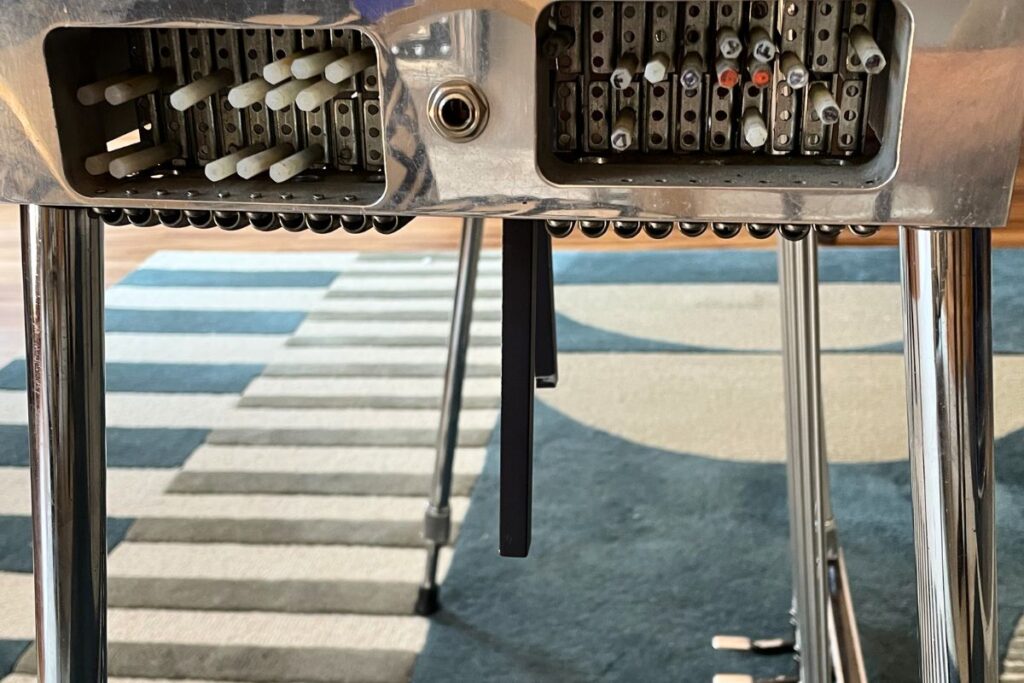
Knee levers are engaged by moving your knees left, right, or upward depending on the lever.
They function similarly to pedals, but add another layer of control since they can be used at the same time as your feet.
Combining pedals and knee levers allows you to:
- Create more complex chord voicings
- Add movement within chords
- Access additional positions without shifting the bar
Most pedal steels have around four knee levers, although some setups include more depending on how customized the instrument is.
The Changing of Pitch
The pedals and knee levers typically raise or lower pitches by a half step or whole step, although some changes go further depending on the setup.
Whether or not you hear the pitch movement depends on how you play the note.
If the string is sustaining while you engage a pedal or lever, the pitch change becomes part of the sound. If the string is muted, the pitch change happens silently and sets up the next note.
Controlling this cleanly is closely tied to how you manage your picking hand, and developing consistency with right hand blocking on pedal steel makes a noticeable difference here.
This is where the instrument starts to feel more expressive, especially when you combine sustained notes with controlled pitch movement.
Half Stops and Half Pedaling
Some knee levers are designed with a “half stop,” meaning you can pause partway through the motion to access an additional pitch before completing the full movement.
Pedals can be used the same way by only pressing them partway down.
This requires a bit more control, since your ear and muscle memory need to work together to land on the right pitch consistently. Over time, this becomes more natural and opens up more subtle phrasing options.
Pedal and Lever Technique
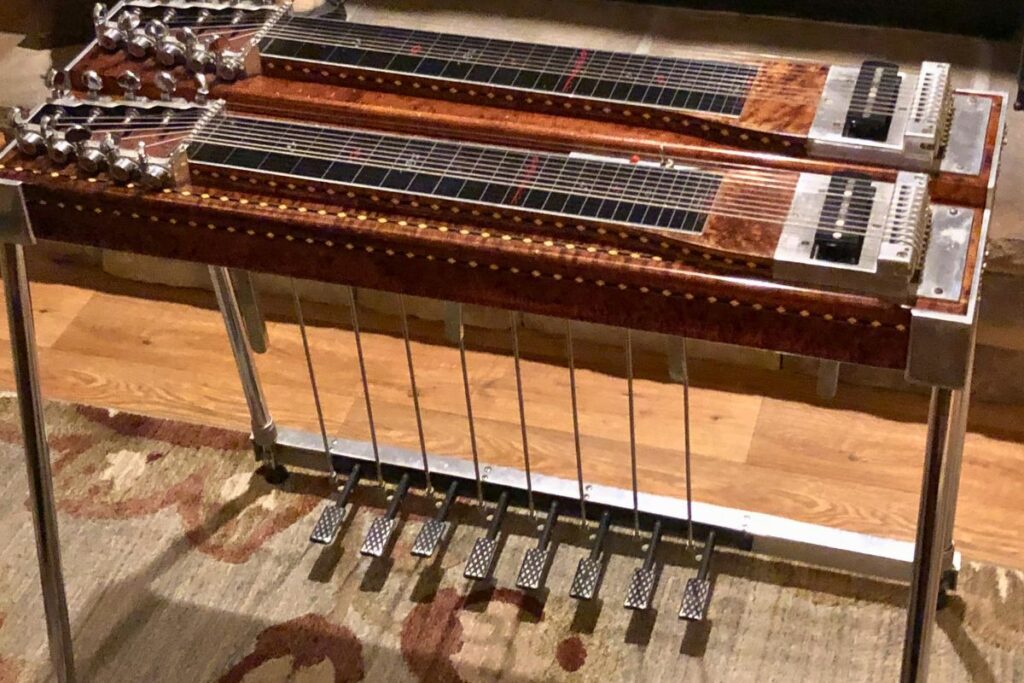
A common starting point on E9 is to position your left foot over the A and B pedals so you can access them quickly.
Keeping your heel on the ground while your foot pivots allows you to move efficiently between pedals without losing balance or control.
At first, your foot may get tired. That’s normal. As your technique develops, your foot will naturally become more relaxed and efficient.
Spending time focusing on smooth, controlled movement will go a long way, and developing this kind of consistency is a big part of building solid left foot pedal technique on pedal steel.
On the C6 neck, it’s also common to use both feet for pedal work, which adds another layer of coordination.
What Kind of Shoes Work Best?
There’s no single right answer here—it comes down to preference.
Some players prefer:
- Barefoot for sensitivity
- Sneakers for balance
- Boots for stability
Each option changes how the pedals feel and respond. The most important thing is consistency. Switching between different types of footwear can noticeably affect your control until you adjust.
Conclusion
The pedals and knee levers are what make pedal steel such a unique instrument. They allow you to shape notes, chords, and movement in ways that aren’t possible on most other instruments.
As you spend more time with them, you’ll start to feel how they connect to your hands and ears, and the instrument begins to open up in a much more intuitive way.
Taking This Further
Getting comfortable with pedals and knee levers becomes much easier when you can clearly see how the notes connect across the neck, especially when you’re working through chord shapes and interval movement.
That’s something that becomes much more intuitive when you spend time with The Chord Guide for E9 Pedal Steel, since it lays out how chords and pedal changes relate in a way that’s easy to follow as you play.
As your control improves, hearing how these movements show up in real playing situations can help everything connect, and working through phrases in 200 Country Riffs & Licks for E9 Pedal Steel is a natural way to apply these ideas musically.
If you want to refine how your technique is developing, small adjustments with timing, coordination, and control can be worked through much more quickly in one-on-one pedal steel lessons.