As an Amazon Associate Playpedalsteel.com earns from qualifying purchases. This page contains affiliate links.
Picking and blocking for pedal steel is one of the most challenging parts of learning the instrument. At the same time, it’s one of the biggest unlocks—once your right hand becomes more controlled, everything else starts to feel easier.
There isn’t one single way to develop this. Every player approaches it a little differently.
What does make a difference is having a clear idea of what you’re trying to improve, and working through patterns that actually show up in real playing.
These five exercises focus on that. They develop right hand control in a way that connects directly to how the instrument is played, not just isolated technique.
They also line up closely with the core areas that drive progress on pedal steel: technique, fretboard awareness, and applying what you know in musical situations.
Exercise 1: Single-Note Control at a Main Position
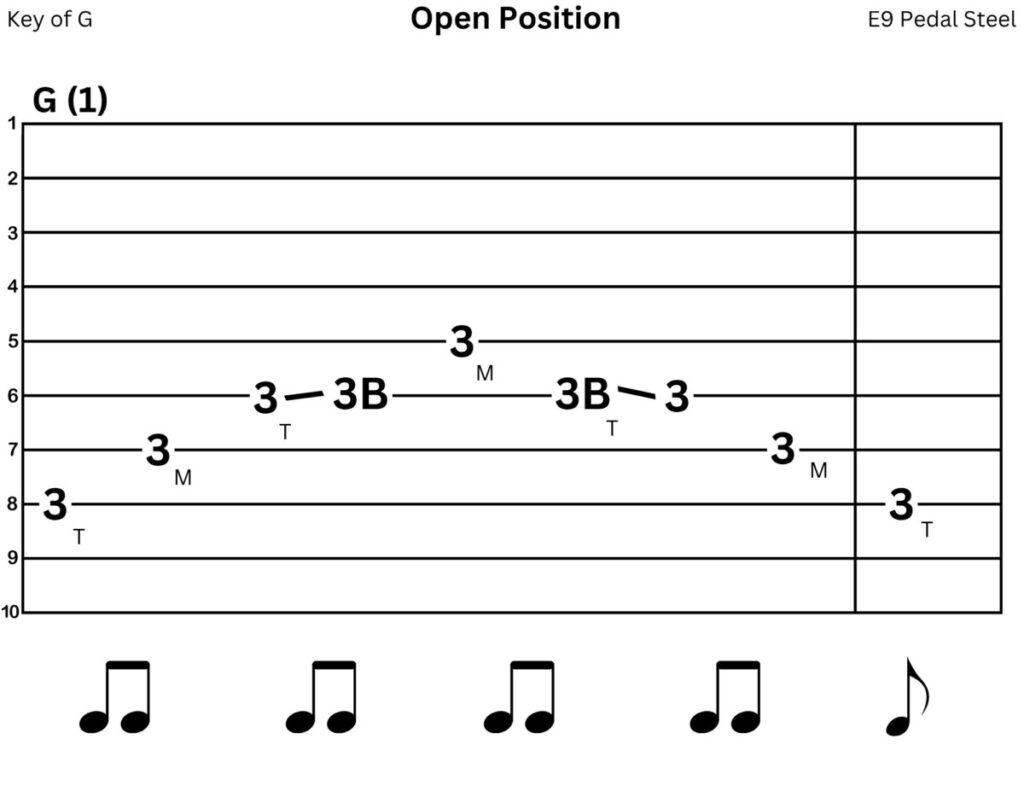
This first exercise is simple on the surface, but it targets one of the most important areas of right hand development: clean, controlled single-note playing.
It’s built around:
- A main position on the E9 neck
- Pedal usage within that position
- Consistent picking across strings
This is where developing a consistent picking approach really matters.
Using a crossover technique—alternating between thumb and middle finger—can make single-note lines feel much more efficient and natural over time. The fingering in this pattern reflects that approach.
As you work through it:
- Keep each note clearly separated
- Avoid letting notes overlap
- Focus on consistency rather than speed
This kind of control becomes much easier to build when your blocking approach is clear, especially when you spend time refining right hand blocking on pedal steel.
Exercise 2: Integrating the 1st String Without Losing Flow
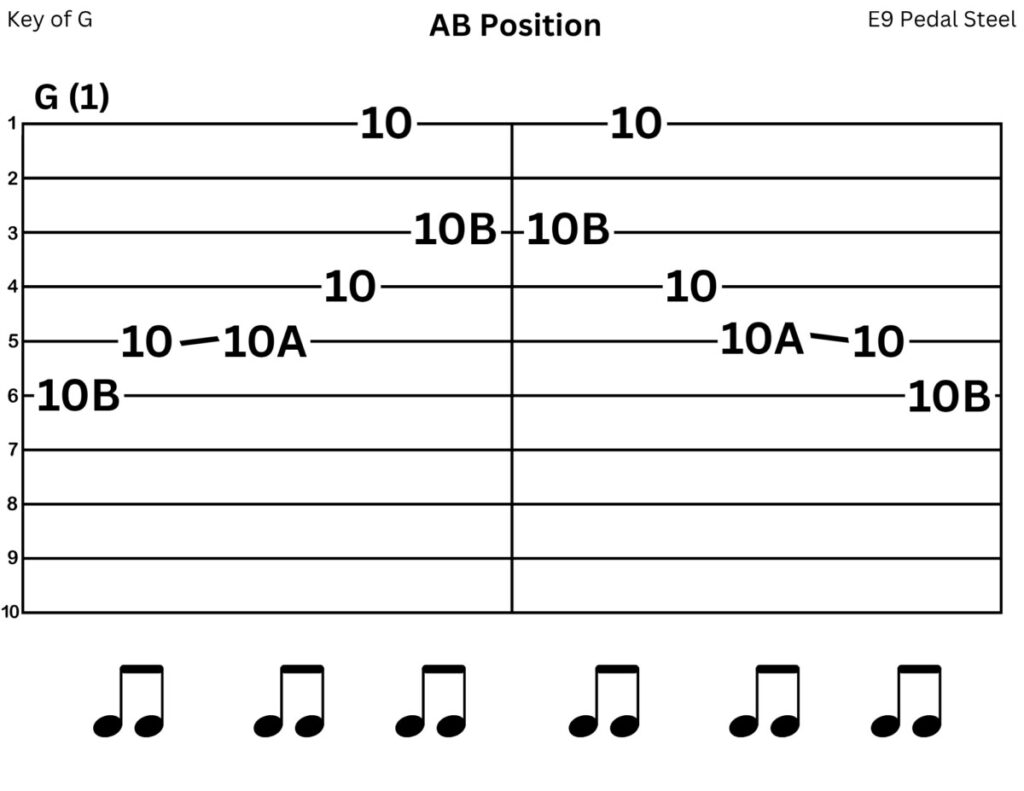
This exercise builds on the first one, but adds an important challenge: incorporating the 1st string into your movement.
The 1st string is incredibly useful on E9, but it can disrupt your right hand if you’re not comfortable with it.
The challenge comes from how the string is laid out:
- It doesn’t follow the same pitch order as the surrounding strings
- It often requires a shift in picking approach
- It can be harder to block cleanly
This pattern uses the AB pedal position and moves through a major pentatonic scale, allowing you to stay in one area while working through multiple strings.
As you practice:
- Keep your picking motion relaxed
- Stay aware of string transitions
- Make sure each note is clearly blocked before the next
Understanding how this string fits into your playing becomes much clearer when you see how it’s used across the tuning, especially in how the 1st string functions on the E9 neck.
Exercise 3: Combining Bar Movement with Right Hand Control
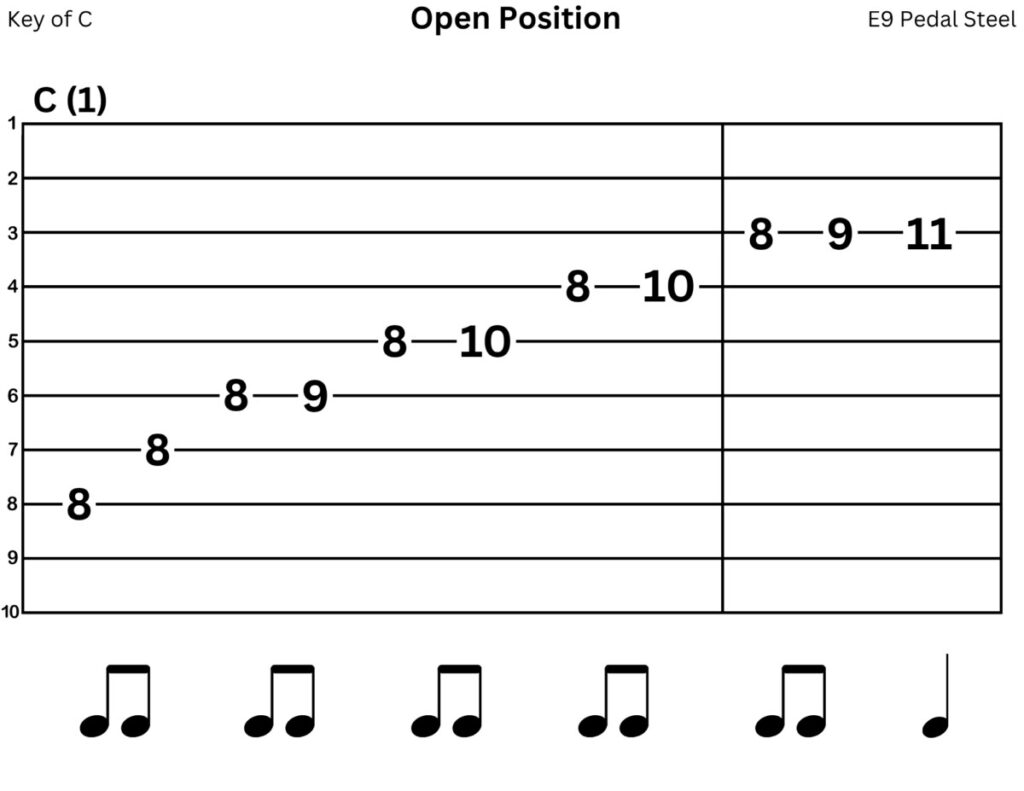
This exercise shifts the focus slightly.
Instead of relying on pedals and levers to create movement, you’ll be using the bar while staying within a position.
Even though this is still rooted in a main position, it forces your right hand to adapt to:
- More movement across strings
- Changing note groupings
- Increased demand for clean blocking
It’s easy to rely heavily on pedals when playing E9, but developing bar movement alongside that opens up a lot more freedom.
This kind of movement becomes much easier to visualize when you understand how positions connect across the neck, especially when working through the three main positions on the E9 neck.
The scale here is essentially a major pentatonic with a passing tone added.
When played in time, starting on a chord tone, it naturally lands strong notes on downbeats. That makes it incredibly useful for building lines that feel connected instead of random.
From a right hand standpoint:
- Only one note should ring at a time
- Blocking needs to be intentional
- String transitions should feel controlled
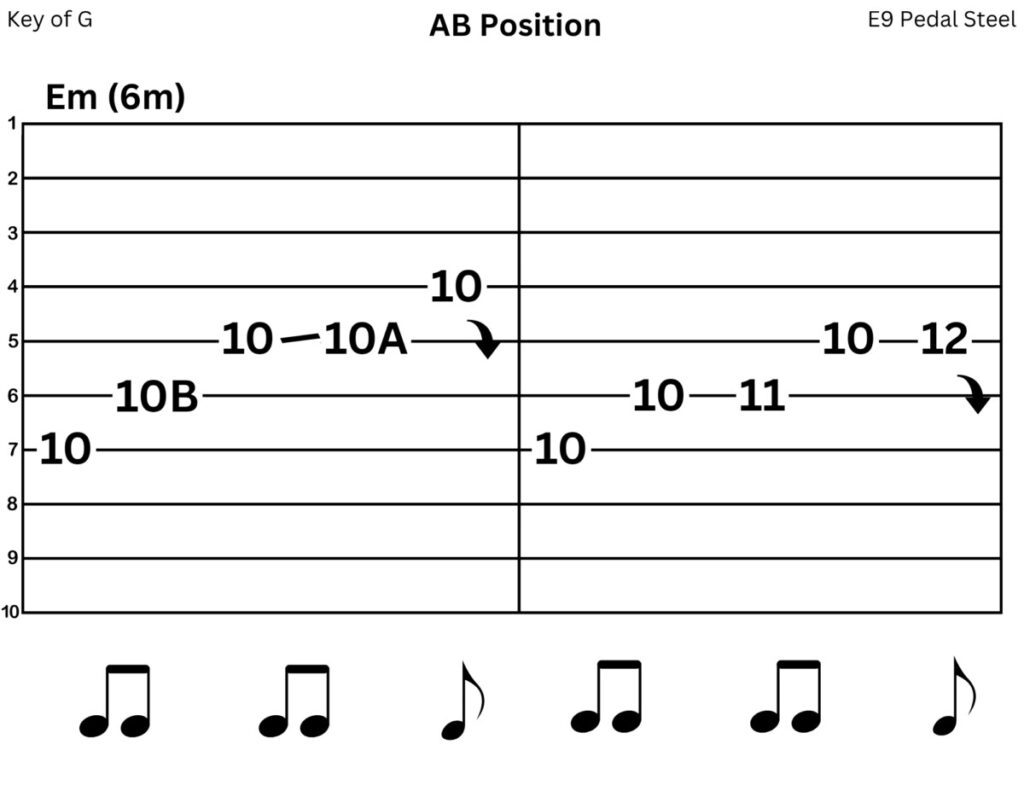
Exercise 4: Five-Note Groupings for Speed and Accuracy
Breaking things into smaller pieces is often the fastest way to improve.
This exercise focuses on five-note groupings, which show up constantly in scales, licks, and phrases.
Instead of running full scales, you’re working with:
- Short, repeatable patterns
- Clear picking sequences
- Manageable chunks of information
These groupings help develop:
- Speed without tension
- Consistent picking patterns
- Better control across string sets
Once these feel comfortable, they naturally connect into longer lines.
This is where technique starts feeding directly into fretboard understanding—especially when you begin to see how scales and patterns connect across positions, which is much clearer when you spend time mapping the fretboard visually.
Use a metronome here and increase tempo gradually. If accuracy drops, slow it back down and rebuild from there.
Exercise 5: String Shifting and Blocking Control
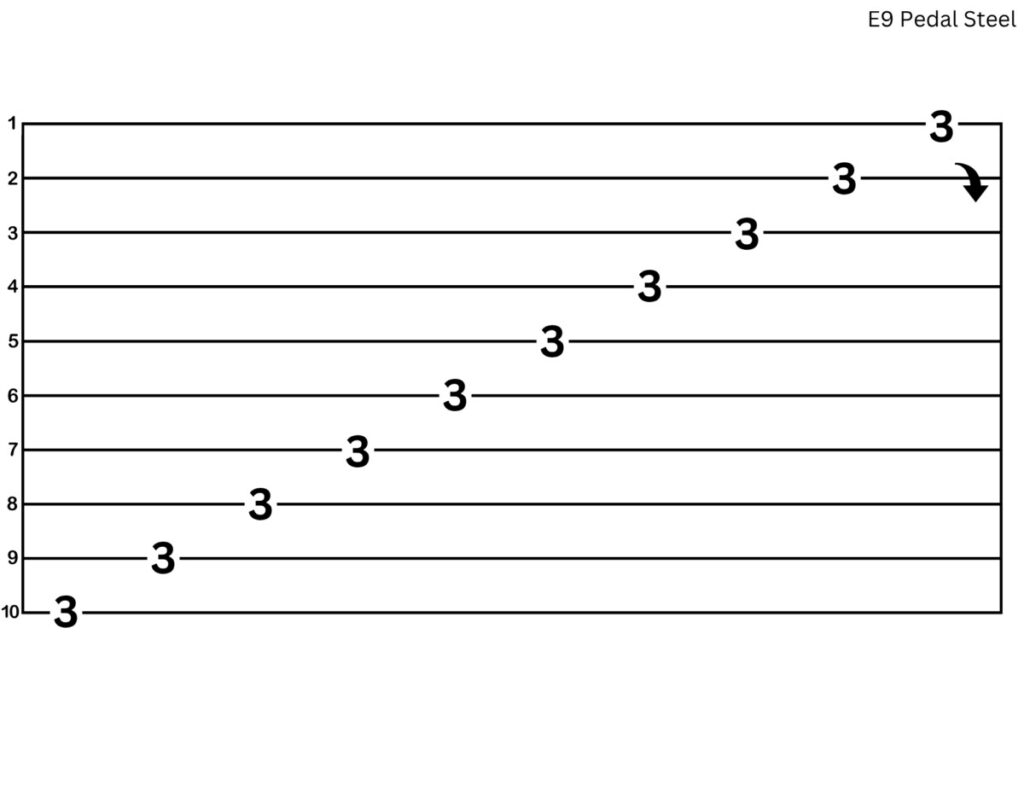
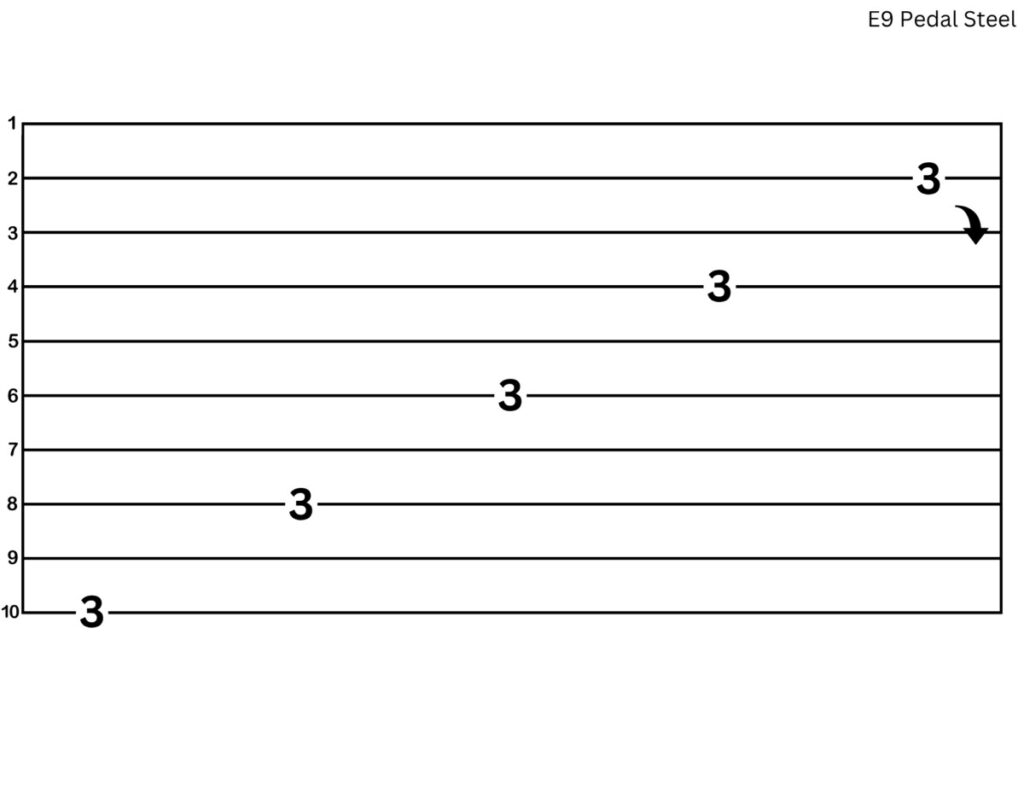
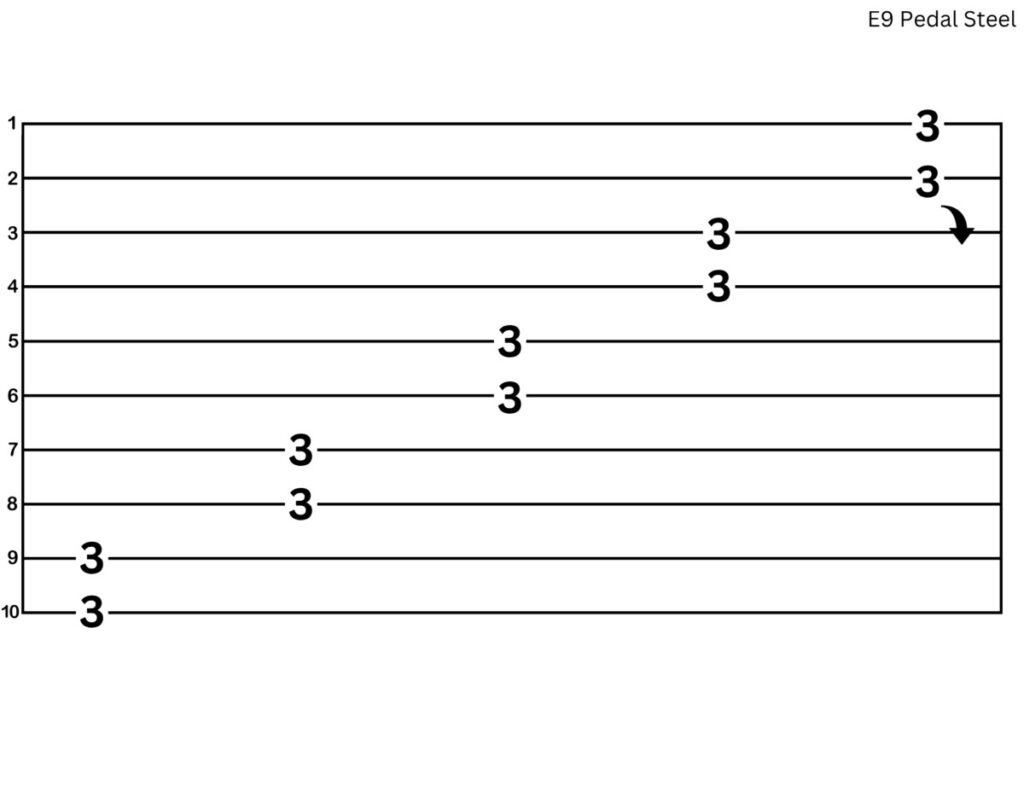
This is one of the most important exercises in the entire group.
It focuses on something that causes a lot of breakdown in playing: moving between string groups while maintaining clean blocking.
The patterns themselves aren’t meant to sound musical. They’re designed to isolate movement.
You’ll be working on:
- Shifting between non-adjacent strings
- Maintaining consistent picking
- Blocking immediately after each note
If your picking hand can’t mute strings as you move, things quickly start to sound messy. This exercise trains that transition directly.
Spending even a few minutes a day on this type of movement can dramatically improve clarity.
This kind of control also becomes much easier to develop when your overall picking approach is consistent and intentional, especially as you build familiarity with how your hand moves across different string groupings.
Conclusion
Right hand technique is one of the biggest factors in how controlled and confident your playing feels.
These exercises aren’t just about speed or mechanics. They’re about building a connection between what your hand is doing and what you’re trying to hear.
If you spend a few minutes on each of these consistently, you’ll start to notice:
- Cleaner note separation
- Better control across strings
- More confidence when playing phrases
Over time, your right hand stops feeling like something you have to manage, and starts feeling like something you can rely on.
Taking This Further
As your right hand becomes more consistent, it becomes much easier to connect technique with actual musical ideas.
That connection is where things really start to open up, especially when you can see how chords and note groupings relate across the neck, which is laid out clearly in The Chord Guide for E9 Pedal Steel.
Hearing how these patterns translate into real phrases can also help everything stick, and working through ideas like this in 200 Country Riffs & Licks for E9 Pedal Steel naturally builds that connection between technique and musical application.
If you want to refine your right hand more directly, small adjustments in picking, blocking, and timing can be worked through much faster in one-on-one pedal steel lessons.