Ever wonder why guitar players are always tapping their foot when they play?
Even if they’re not thinking about it, their foot is acting as a physical connection to the rhythm they hear. It becomes a kind of muscle memory that helps lock everything into time.
Drummers do this naturally with their kick and hi-hat, and guitar players often mirror that motion by tapping their foot along with the beat.
It’s a simple habit, but it makes a big difference.
Why This Matters on Pedal Steel
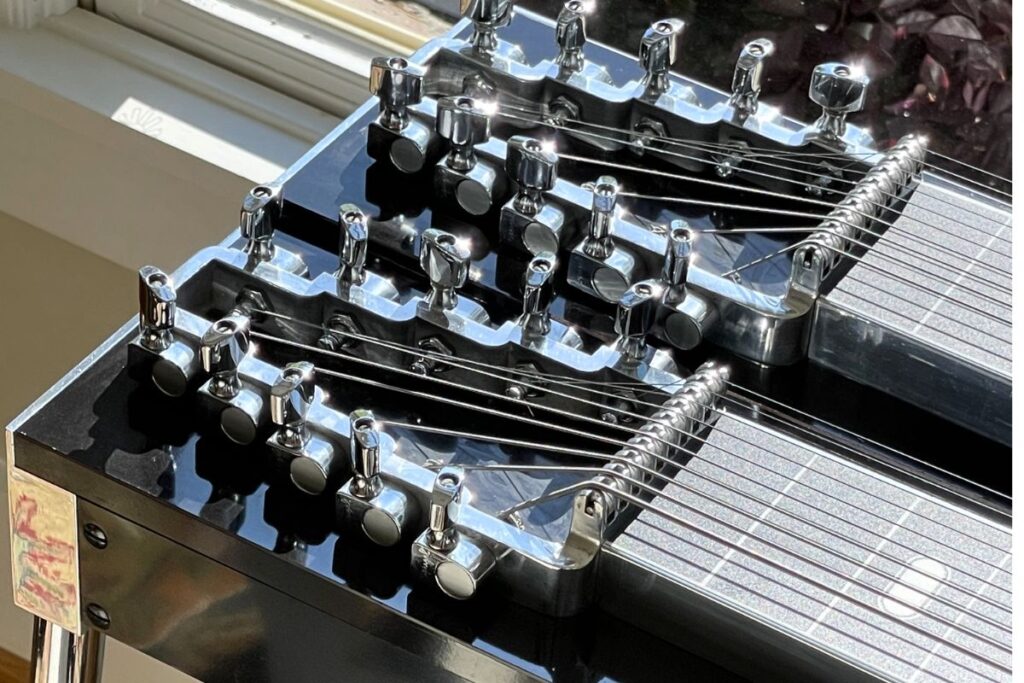
On pedal steel, things get a little more complicated.
Both of your feet are already doing important jobs. Your left foot is working the pedals, and your right foot is controlling the volume pedal.
So the question becomes: how do you keep that same internal sense of time without losing control of everything else?
Using Your Toes Instead of Your Foot
The answer is to shift the motion from your whole foot to your toes.
Instead of lifting your foot up and down, you can tap your toes inside your right shoe while your foot stays in position on the volume pedal.
This lets you:
- Keep a steady pulse
- Maintain control of your volume pedal
- Build a physical connection to time
At first, this can feel awkward. You’re asking your right foot to do two things at once—control volume and keep time—but over time it becomes much more natural.
This kind of coordination becomes easier when your overall foot control is consistent, which is why spending time with left foot pedal technique on pedal steel tends to improve your right foot stability as well.
Practicing Toe Tapping
The best way to build this is to practice it deliberately.
Sit down at your pedal steel and:
- Set a metronome to a slow tempo
- Keep your right foot relaxed on the volume pedal
- Tap your toes along with the beat
The key is to make sure your volume stays steady while you’re tapping.
If the volume is fluctuating, slow things down and focus on keeping your foot stable while the toes move independently.
Over time, your toes will begin to keep time automatically, without interfering with your playing.
Away From the Instrument
This doesn’t just apply when you’re sitting at the pedal steel.
You can build this habit anywhere:
- In the car
- Listening to music
- At a concert
Tapping your toes along with music throughout the day helps reinforce that internal sense of time, so when you sit down to play, your body already knows where the beat is.
On the Bandstand
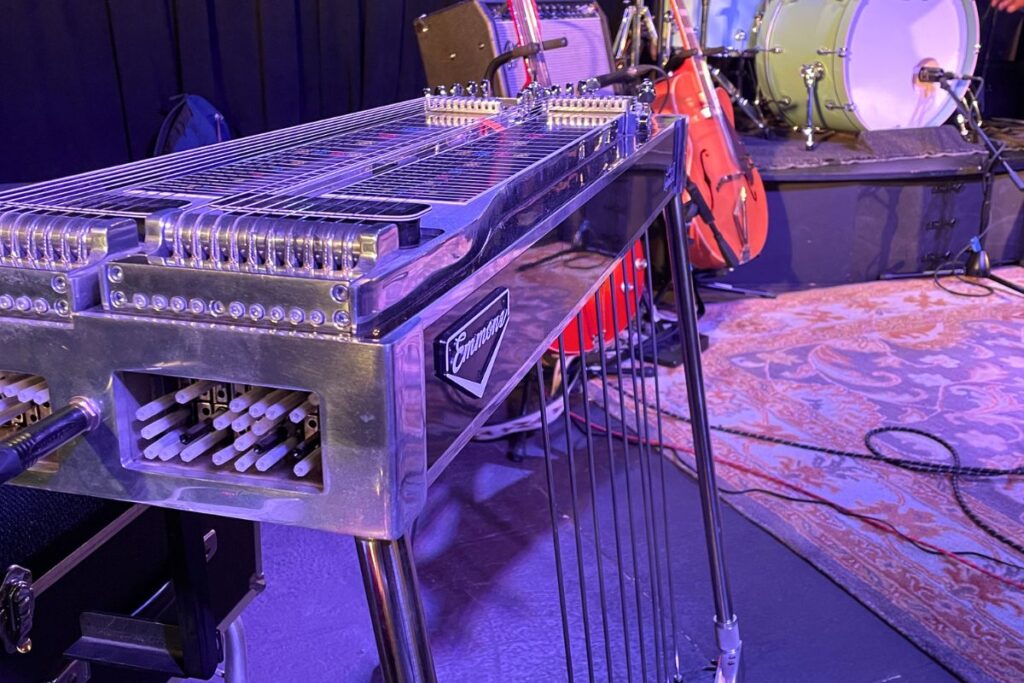
This becomes especially useful in real playing situations.
When you’re playing with a band, your internal time helps you stay locked in with the groove. When you’re playing without a drummer, it becomes even more important.
Being able to keep a steady pulse with your toes allows you to:
- Stay grounded rhythmically
- Support the overall feel of the music
- Play more confidently in solo or sparse settings
This is especially helpful for chord-melody playing or more open arrangements where time isn’t being driven by another instrument.
Connecting This to Your Playing
At a certain point, this stops feeling like something you’re “doing” and starts feeling like part of how you play.
Your hands, feet, and ears begin working together in a more connected way.
Developing that kind of coordination doesn’t happen all at once, but small habits like this add up quickly over time, especially when you’re working through a clear way to build your overall technique.
Taking This Further
Keeping steady time becomes much easier when it connects to how you pick and phrase notes, especially as your right hand starts to feel more consistent.
That connection tends to click when you spend time with Right Hand Picking & Blocking for Pedal Steel, since it ties together timing, attack, and control in a way you can feel while you play.
As your timing improves, applying it musically helps everything stick, and working through phrases in 200 Country Riffs & Licks for E9 Pedal Steel gives you a natural way to hear how solid time translates into real playing.
If you want to tighten this up more directly, small adjustments in timing and coordination can be worked through much faster in one-on-one pedal steel lessons.