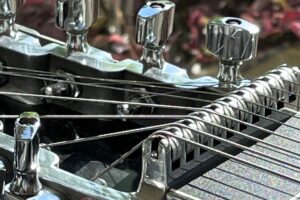
A simple framework that helps organize technique, fretboard knowledge, and musical application.
Many pedal steel players spend their first months collecting information — tabs, books, YouTube lessons, and new licks to try.
At first it feels exciting because you’re constantly learning new sounds and ideas. But after a while, many players hit a confusing point: despite all the material they’ve gathered, their playing still doesn’t feel fluid.
Right-hand technique still feels inconsistent, improvising over songs feels difficult, and when a chord progression moves by, it’s hard to connect the ideas you’ve practiced into something musical.
This is the moment when many players start asking an important question:
“With all the information I’ve learned, what am I actually supposed to practice?”
Why More Information Doesn’t Always Lead to Better Playing
When players hit this point, the natural instinct is to look for more information — more tabs, more videos, more licks to learn.
But in most cases the problem isn’t a lack of information. The real issue is that many learning resources present ideas in isolation rather than showing how they connect together.
A player might learn a great lick from a tab, another idea from a video, and a useful technique exercise from a book — but without a clear structure tying those things together, it’s hard to understand how they actually function when you’re playing music.
Over time this can lead to a collection of ideas that feel interesting on their own, but difficult to apply fluidly when a song is moving through chord changes or when you try to improvise.
What’s usually missing isn’t more material — it’s a simple framework that helps organize what you’re already learning.
The Three Pillars of Pedal Steel Progress
If learning the instrument begins to feel scattered, the solution usually isn’t more information — it’s better structure.
Through years of playing and teaching, I’ve found that progress on pedal steel becomes much more consistent when practice is organized around a few core areas that work together musically.
Instead of treating every new lick, tab, or exercise as a separate piece of information, it helps to understand how those ideas relate to each other when you’re actually playing a song or moving through a chord progression.
In my experience, most players make steadier progress when their practice is built around three essential areas of development.
1. Technique
Pedal steel is one of the most physically and mechanically demanding instruments to play, and developing reliable technique is essential. This includes right-hand picking and blocking, along with the coordination between your hands, feet, and knee levers as you combine bar control, pedals, and the volume pedal.
When technique is inconsistent, even good musical ideas can feel difficult to execute. Building solid fundamentals here allows the musical side of the instrument to come through much more naturally.
2. Fretboard Understanding and the Number System
The second pillar is understanding how the fretboard relates to harmony. This is where concepts like chord structure and the Nashville Number System become especially useful.
Instead of memorizing isolated licks or tabs, players begin to see how chords, scales, and positions relate to each other across the instrument. This makes it easier to recognize what’s happening in a song and move around the fretboard with more confidence.
3. Application Over Chord Progressions
The third pillar is learning how to apply technique and fretboard knowledge in real musical situations. This is where phrasing, connecting ideas across chord changes, and playing/improvising over progressions begin to develop.
Rather than thinking only in terms of memorized licks, players start to understand how ideas relate to the chords underneath them. This makes it possible to adapt what you know to different songs and musical contexts.
When these three areas develop together, the instrument starts to feel much more connected. Technique supports musical ideas, fretboard knowledge provides direction, and everything begins to work together when you play over real music.
A Simple Example Over a Chord Progression
A simple way to see how these ideas connect is to look at a basic 1–4–5 chord progression.
This type of progression appears in countless songs and provides a good example of how technique, fretboard understanding, and musical application work together.
When you understand where the chord tones live on the fretboard and how they relate to the harmony of the song, it becomes much easier to turn simple ideas into musical phrases.
The following short examples illustrate how a few simple ideas can connect to the harmony of a basic 1–4–5 progression.
Example 1: Targeting Chord Tones Across the Progression
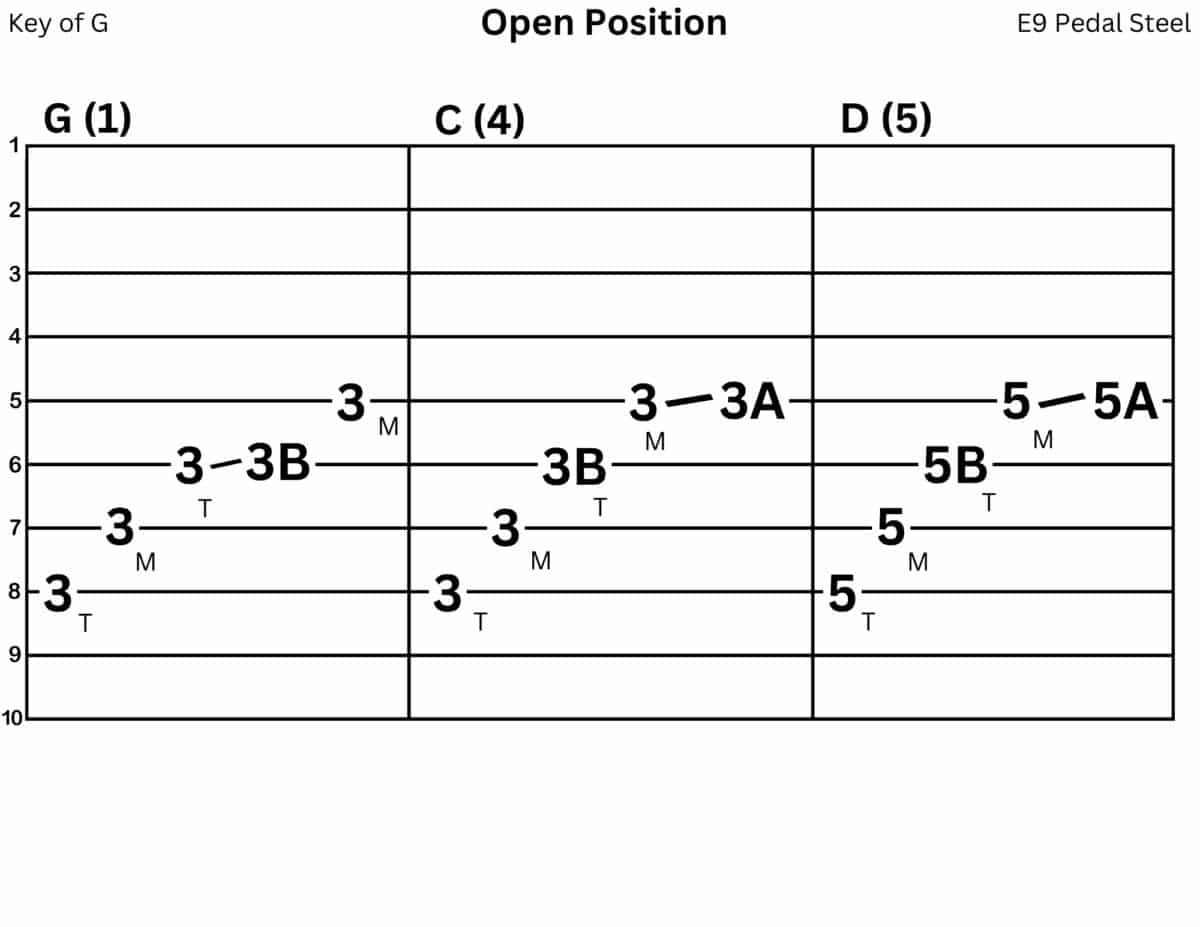
Let’s look at a 1–4–5 progression in the key of G using one of the pedal steel’s main positions — the open position at the 3rd fret.
The example below shows a common way to play the 1–4–5 chords at this position…
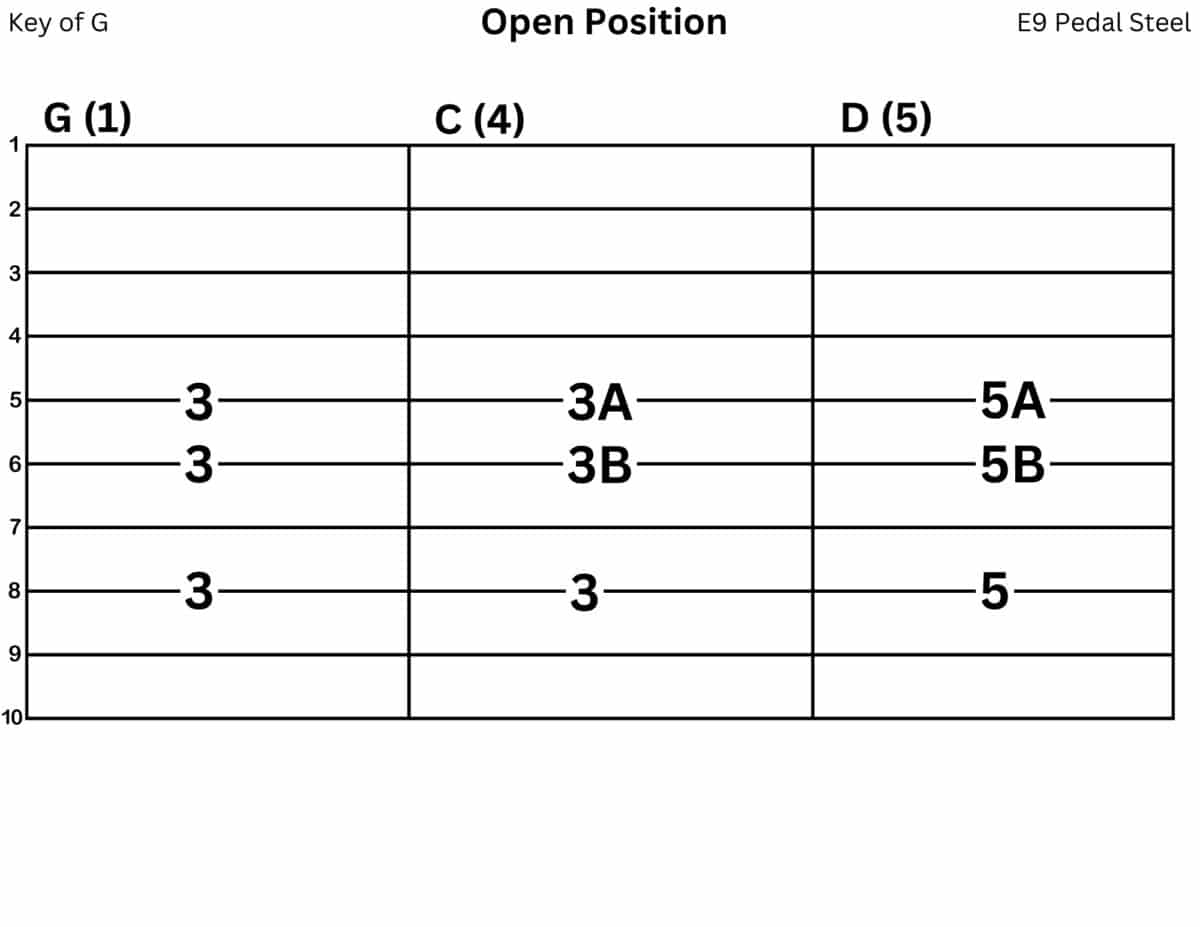
If we separate the notes of these chords into an arpeggio, we begin turning the chord shapes into something more melodic…
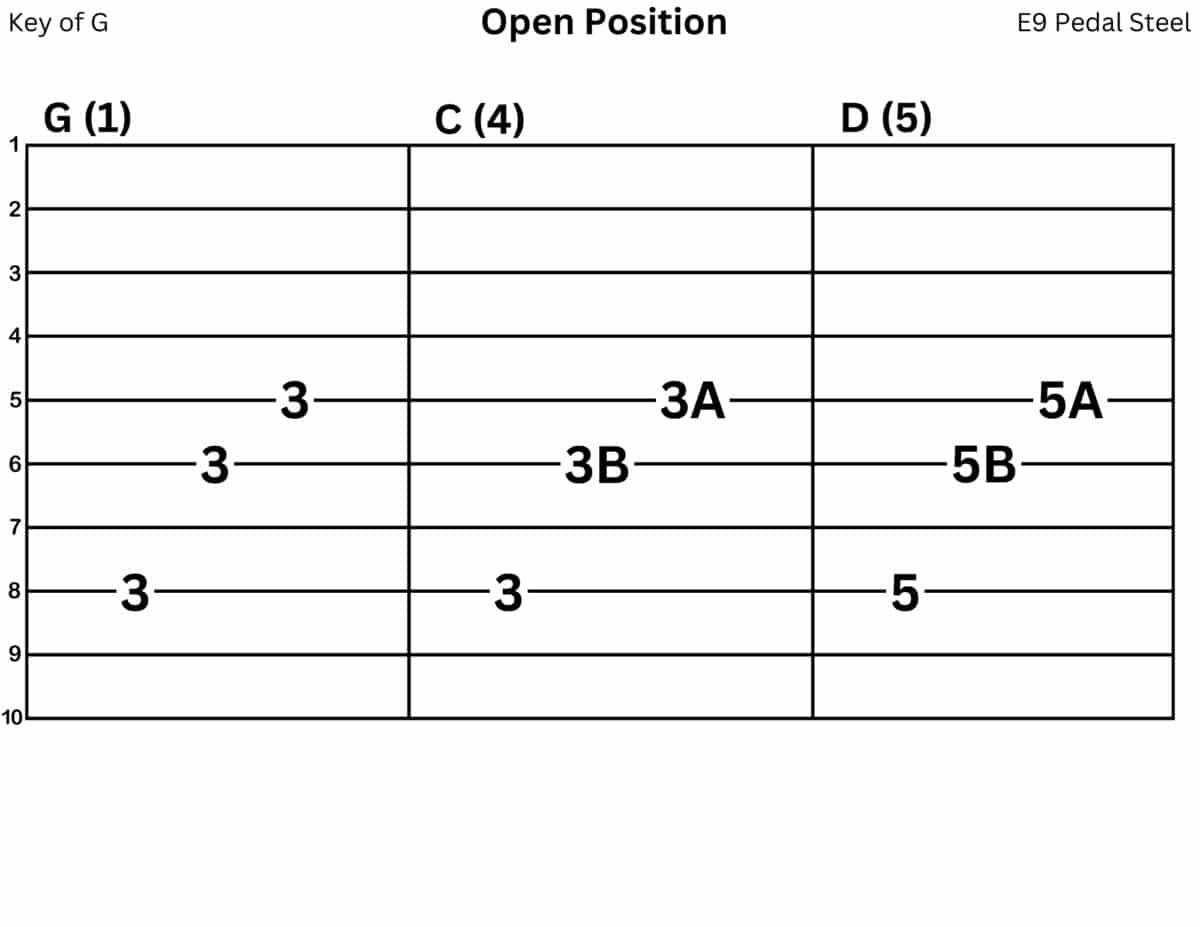
What this does is outline the chord tones as the progression moves, reinforcing how the harmony is changing underneath the line.
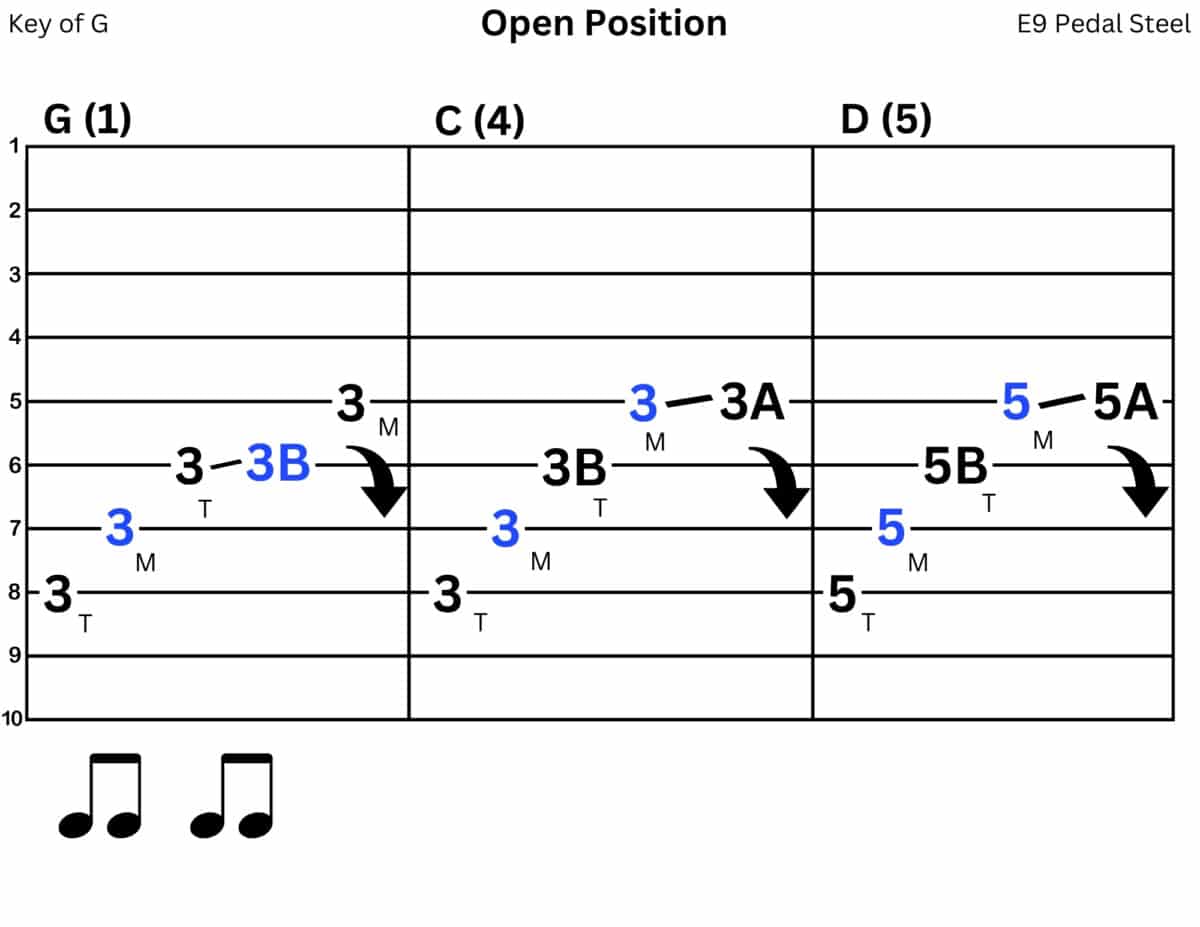
Example 2: Turning Chord Tones into a Phrase
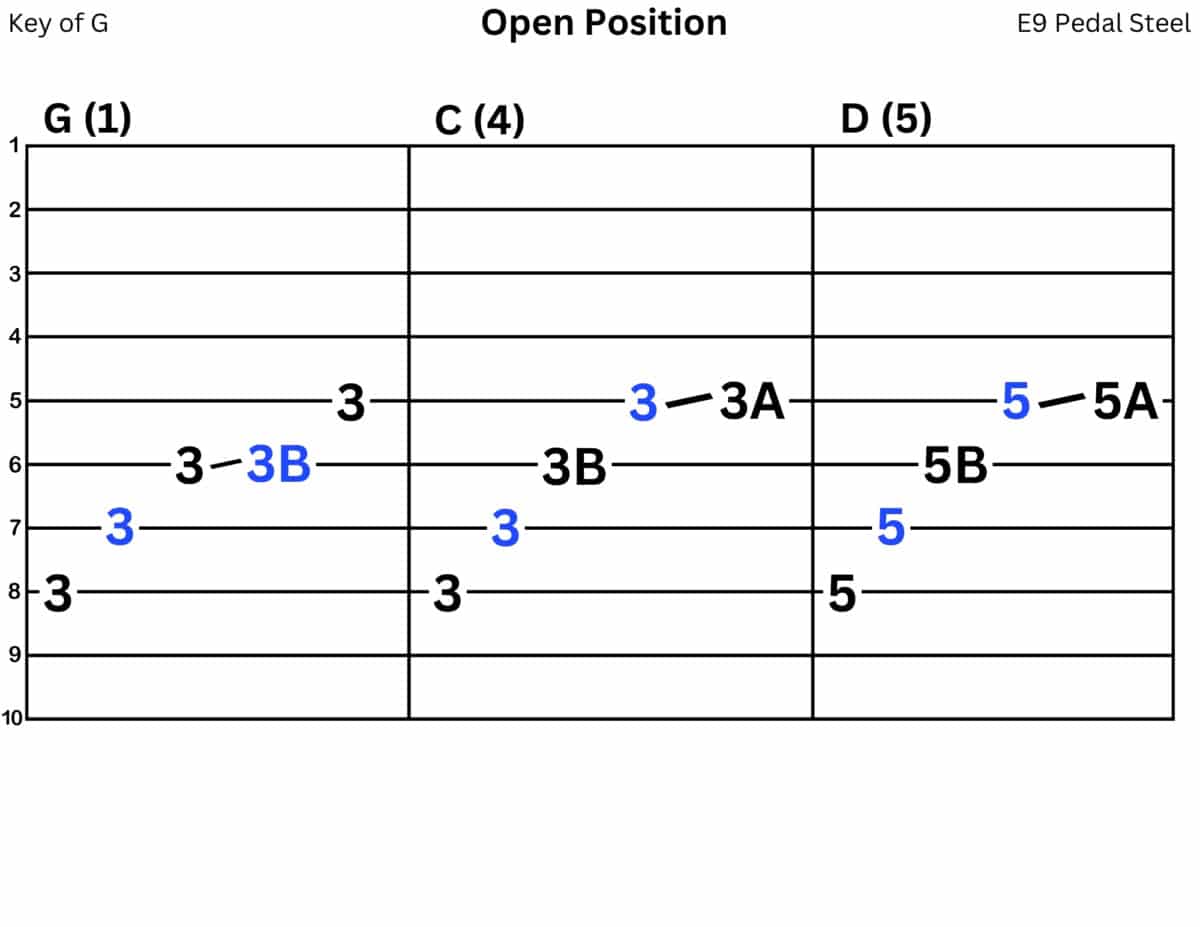
Here the same harmonic framework is used, but a few passing notes and movement between chord tones turn the idea into a more musical phrase.
The chord tones remain the foundation of the line, while the additional notes create motion between them.
Because the phrase uses the same group of strings, it also becomes a useful exercise for building right-hand picking and blocking consistency (see tab above).
With practice, ideas like this begin to feel natural and can easily evolve into licks, fills, or improvisational phrases when playing over songs or backing tracks.
Example 3: Moving the Idea to Another Position
Because the idea is built around the harmony rather than a single memorized lick, it can easily be moved to other areas of the fretboard.
Here the same concept is moved to the AF position for the key of G at the 6th fret.
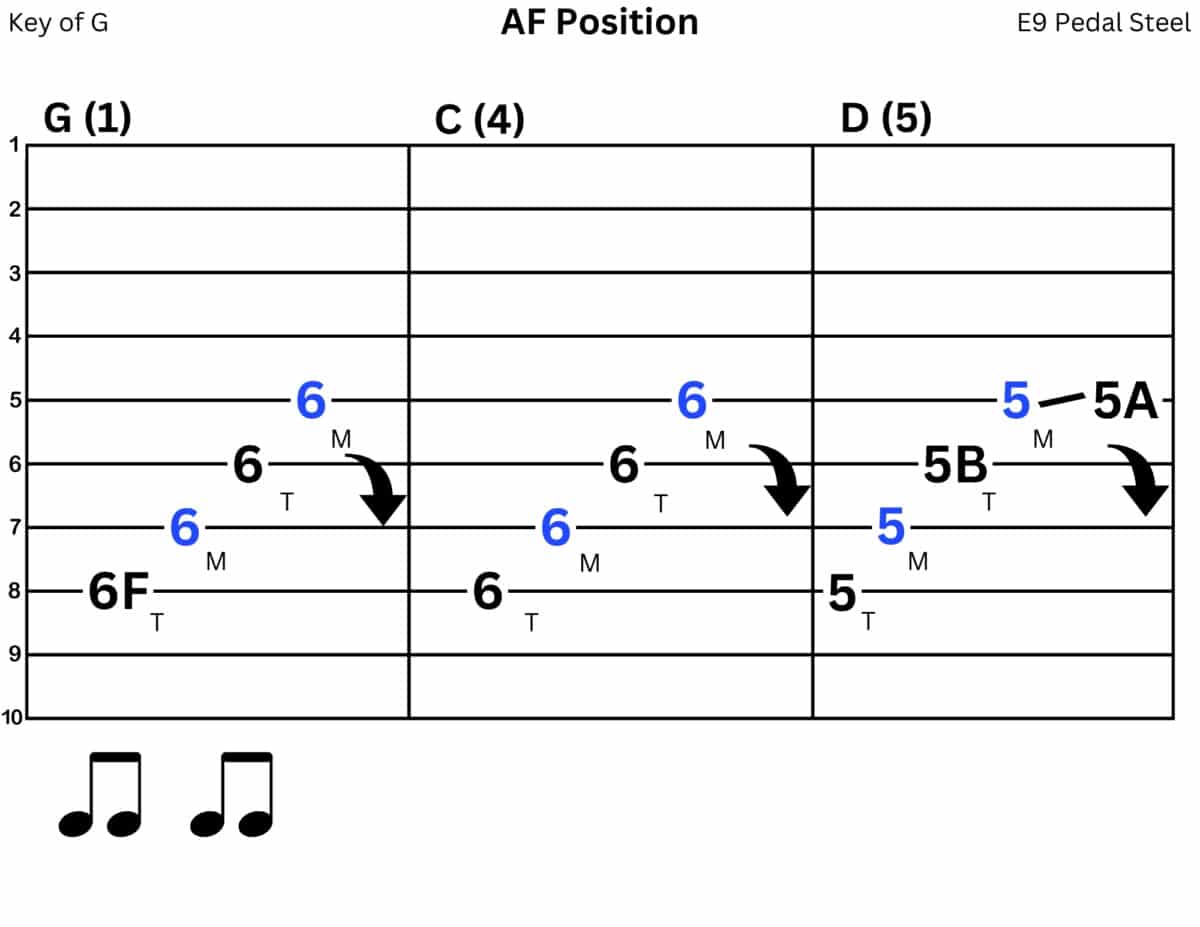
Notice that the chord tones remain mostly the same even though the position changes. In this position we’ve added a few additional color tones — like the b7 and 9 — to the 1 and 4 chords, while the right-hand fingering stays consistent.
What looked like a simple pattern (as seen below) now reveals a deeper connection between technique, fretboard knowledge, and the harmony of the progression.
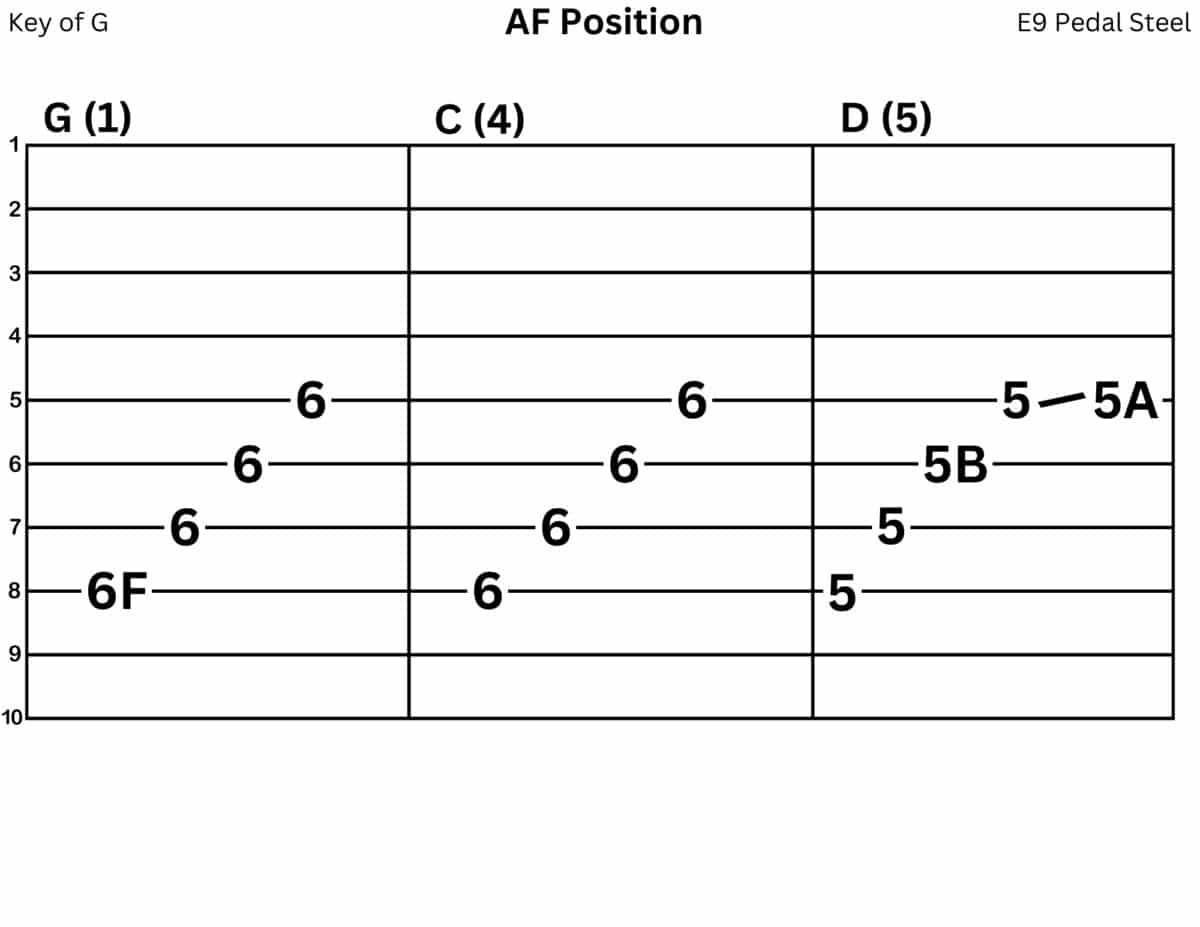
Again, at first this may look simple, but it contains a lot of useful information.
Ideas and patterns like this are built from understanding how the notes on the fretboard relate to the harmony of the song. When that understanding develops, players can create musical phrases much more freely instead of relying only on memorized licks.
This type of approach reflects the same principles used by great players like Buddy Emmons — a deep understanding of the fretboard combined with strong technique and the ability to apply those ideas musically over chord progressions.
Connecting Ideas Instead of Collecting Licks
Many players spend years collecting licks and tabs, but real progress often comes from understanding how those ideas connect to the harmony of the song.
When technique, fretboard knowledge, and musical application develop together, the instrument begins to feel much more organized and easier to navigate.
Instead of memorizing isolated phrases, players start to understand how musical ideas relate to the chords underneath them — which makes it easier to adapt what they know to different songs and musical situations.
In the coming weeks I’ll also be sharing more ideas on how to organize these concepts into a clear and effective daily practice routine.
Explore more pedal steel lessons in the Playpedalsteel Articles Library.
Continue Learning
If you’d like to explore these ideas further, here are a few ways to continue working with them.
Instructional Materials
I’ve written several instructional books that explore technique, fretboard understanding, and musical application in much greater depth.
→ Explore the instructional materials
Private Lessons
Many students I work with are players who feel stuck or overwhelmed by scattered information and aren’t sure what they should actually be practicing.
If you’d like help applying these concepts directly to your own playing, I work with a small number of pedal steel students each month through remote lessons.